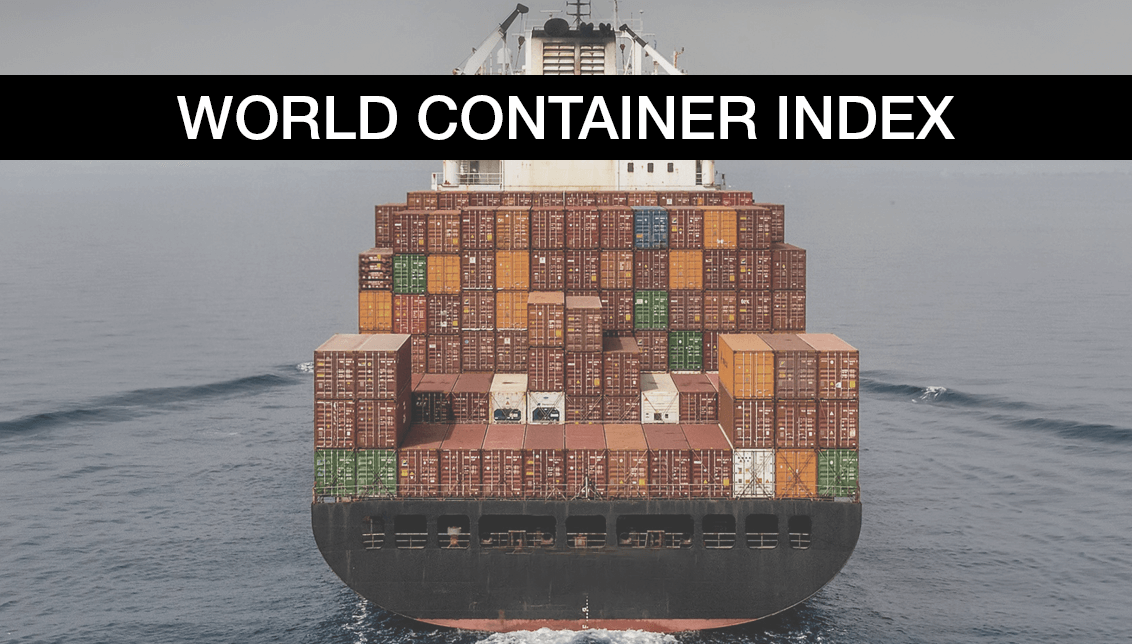
Container freight is back on the market radar because June stopped looking like a sleepy shoulder season. Drewry said on June 11 that its World Container Index rose 3% to $3,549 per 40-foot container, driven by Transpacific and Asia-Europe rate increases. Freightos had already flagged on June 2 that this year’s peak season was starting early, with Asia-US West Coast prices up 1%, Asia-US East Coast up 4%, Asia-North Europe up 3%, and daily rates beginning to spike as carriers tightened allocations.
The cleaner signal is that carriers are no longer talking like a market with spare calm. Maersk announced a peak-season surcharge from Far East Asia to the United States and Canada effective June 17, with $1,000 on 20-foot containers and $2,000 on 40/45-foot boxes. It also announced a separate Far East Asia to North Europe and Mediterranean surcharge effective June 10, with South Korea-origin cargo moving onto the same structure from June 25. That matters because Japan and Korea sit directly inside the repricing lane, while Europe and the U.S. are the end markets absorbing the new freight bill.
The geopolitical kicker is that the route-risk premium still has not gone away. Maersk’s June Europe market update said conditions in the Strait of Hormuz were still unpredictable and not showing significant signs of improvement. Yonhap reported on June 11 that another South Korea-operated vessel had just transited the strait successfully, but 24 South Korean vessels had still been stranded there before the latest passage. In other words, traders are not just paying for boxes; they are paying for optionality, detours, timing uncertainty, and fuel-related pass-through.
My read is that this is not yet a clean long-only shipping supercycle. It looks more like a volatility regime shift. If rates keep grinding higher, listed shipping and logistics names can catch speculative inflows, but the more durable cross-market message is probably negative for low-margin importers and manufacturers that had assumed freight normalization was a solved problem. The interesting basket is not just ocean carriers. It is also exporters with pricing power, retailers with weak margin buffers, and industrials exposed to cross-border component flows.
Risk notice: Freight rates can reverse quickly if carriers add capacity, demand front-loading fades, or Middle East shipping conditions stabilize. This article is market commentary, not personalized investment advice.
Sources:
Drewry World Container Index, June 11, 2026
Freightos weekly freight update, June 2, 2026
Maersk Asia-US/Canada peak season surcharge notice, May 18, 2026
Maersk Asia-Europe peak season surcharge notice, May 25, 2026
Maersk Europe market update, June 3, 2026
Yonhap on South Korea-operated vessels in Hormuz, June 11, 2026
原创文章,作者:financial transaction,如若转载,请注明出处:https://www.fanbi.net/archives/383