

Friday, June 5, looked less like a routine pullback and more like the first honest shakeout in the global AI crowding trade. Reuters reported that Asian equities dropped as investors took profits in technology and AI names, with South Korea’s tech-heavy KOSPI plunging as much as 7% and Japan’s Nikkei also sliding. That matters because Korea had become one of the purest public-market expressions of AI enthusiasm, driven by Samsung Electronics and SK hynix, so when Seoul breaks first, traders everywhere start asking whether the easiest part of the AI re-rating is already behind us.
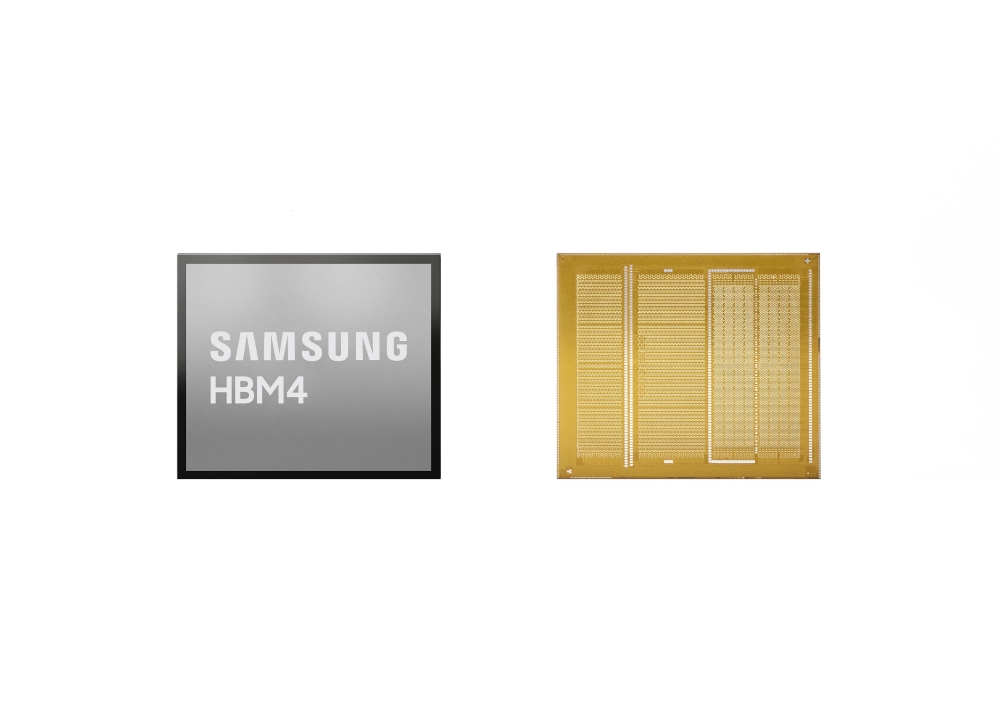
The key point is that this is not a collapse in the AI buildout itself. In fact, the fundamental pipeline still looks huge. Reuters reported on June 1 that South Korea’s May exports posted their strongest annual growth in more than four decades, powered by record chip sales tied to the AI boom. SoftBank said on May 31 that it plans to build up to 5 gigawatts of AI data-center capacity in France. Arm has pushed deeper into agentic-AI infrastructure with its AGI CPU and fresh NVIDIA-linked PC messaging, while Broadcom and Samsung are still selling bigger AI networking and memory roadmaps. ASML’s own first-quarter statement also kept pointing to AI demand as a real support for the equipment cycle.
That is why today’s move matters. The market is no longer rewarding the story alone. It is starting to demand proof that the spectacular capex wave can translate into margins, delivery schedules and valuations that still make sense after a near-vertical run. Reuters’ June 4 Trading Day note captured the rotation clearly in the United States: Broadcom fell 12.6% and Micron dropped 7.7% even while other sectors found buyers. In other words, money did not leave the market entirely; it simply stopped paying any price for AI exposure.
Japan and Europe sit awkwardly in the middle of this shift. Japan still has huge leverage through SoftBank, Arm, Tokyo-listed AI proxies and supply-chain exposure to the global compute boom, but that also means it inherits more valuation risk when momentum cools. Europe has better narrative support than many expected, from France’s AI infrastructure ambitions to ASML’s still-solid order logic, yet European AI beneficiaries now have to prove they are more than second-derivative trades on U.S. hyperscaler spending.
My cautious view is that this is a healthy but uncomfortable transition from narrative beta to execution beta. I do not think the AI capex cycle is over; the evidence says the spending race is still real. But I do think the market has entered a tougher phase where Korea’s memory leaders, Japan’s AI holding-company exposures, Europe’s equipment names and U.S. semiconductor winners will be judged less on headlines and more on whether revenues, utilization and margins keep up with the valuation promises already baked in.
Risk notice: This article is for market commentary only, not investment advice. AI-related equities, semiconductors, infrastructure names, index futures and crypto-linked risk assets can move sharply on earnings, geopolitics, export controls, valuation resets and shifts in risk appetite.
Sources:
Reuters via Investing.com – Stocks drop as AI rally pauses, U.S.-Iran peace talks stall (June 5, 2026)
Reuters via Investing.com – Trading Day: Who needs tech? (June 4, 2026)
Reuters via Investing.com – South Korea export growth hits four-decade high as chip sales hit record on AI boom (June 1, 2026)
SoftBank Group – 5 GW of AI data center capacity in France (May 31, 2026)
ASML – Q1 2026 financial results (April 15, 2026)
Arm – NVIDIA RTX Spark and the agentic PC era (June 2, 2026)
Reddit r/stocks discussion – South Korea overtakes India as world’s sixth-largest stock market (June 2, 2026)
原创文章,作者:financial transaction,如若转载,请注明出处:https://www.fanbi.net/archives/261