
The fresh market hotspot is not simply uranium miners. It is the nuclear fuel chain itself. Urenco said on June 2 that it will expand the capacity of the United States’ only commercial uranium enrichment facility by nearly 50%, a move that immediately sharpened the debate over who will control the bottleneck between reactor demand and actual fuel availability. That is why this story is trading like infrastructure rather than theory.
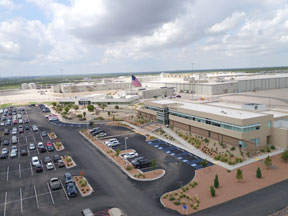
The U.S. angle is straightforward. Urenco’s new plan adds 2.1 million separative work units on top of an expansion already under way and lifts the New Mexico facility toward more than 7 million SWU over the next decade. For traders, that matters because it confirms that fuel-cycle capacity, not just reactor announcements, is where the real scarcity premium sits. Utilities want reliability, advanced-reactor developers want future feedstock, and investors are starting to separate serious supply-chain assets from promotional nuclear narratives.
Japan is no longer just a passive part of that chain. The U.S. Department of Energy said on May 7 that it secured 1.7 metric tons of HALEU from Japan, the largest single international uranium shipment in NNSA history. That is a meaningful signal. Japan’s role in the market is shifting from being viewed mainly as a post-Fukushima policy case to being treated as a strategic node in the advanced-fuel buildout. When traders see actual material moving, the story becomes more concrete than another conference slide about future reactors.
Europe adds the industrial depth behind the headline. Urenco said its broader global expansion covers the United States, the Netherlands and Germany. That means the fuel-chain rerating is not just an American policy trade. It is also a European industrial-capacity story tied to energy security, contract visibility and the West’s effort to reduce dependence on Russian fuel services. My read is that this is quietly more important for valuation than many of the louder political headlines around nuclear power.
South Korea gives the market its policy optionality. Yonhap reported on June 3 that Seoul and Washington continued talks with uranium enrichment rights and spent-fuel reprocessing for civilian use in focus. Korea is already central to the global reactor and heavy-industry conversation, so any shift in its fuel-policy room matters well beyond diplomacy. Traders are watching whether Korea remains mainly a reactor-export story or starts to gain a larger role in the higher-margin fuel and services layer.
The reason traders are discussing this now is simple: the market is moving from the easy phase of the nuclear trade, where almost any ticker with atomic branding could rally, into the harder phase where fuel access, enrichment capacity and regulatory permissions decide who actually gets paid. My cautious view is that this favors firms tied to real fuel-chain assets and long contracts, while more speculative names may keep swinging violently whenever the timeline for HALEU and LEU supply slips.
Risk notice: This article is for market commentary only, not personalized investment advice. Uranium, nuclear-power, utility, industrial and advanced-reactor related assets can be highly volatile and may react sharply to regulation, project delays, fuel availability, geopolitical moves and changes in government support. Past market behavior does not guarantee future results.
Sources:
Urenco: Urenco USA plans significant expansion of U.S. uranium enrichment capacity
U.S. Department of Energy: U.S. secures largest-ever HALEU shipment with Japan
NRC: Louisiana Energy Services / Urenco USA facility information
Yonhap: South Korea-U.S. talks continue with uranium enrichment rights in focus
Reddit discussion: traders debate what Urenco expansion means for OKLO and fuel timing
Centrus Energy: First quarter 2026 results and HALEU expansion commentary
原创文章,作者:financial transaction,如若转载,请注明出处:https://www.fanbi.net/archives/185