


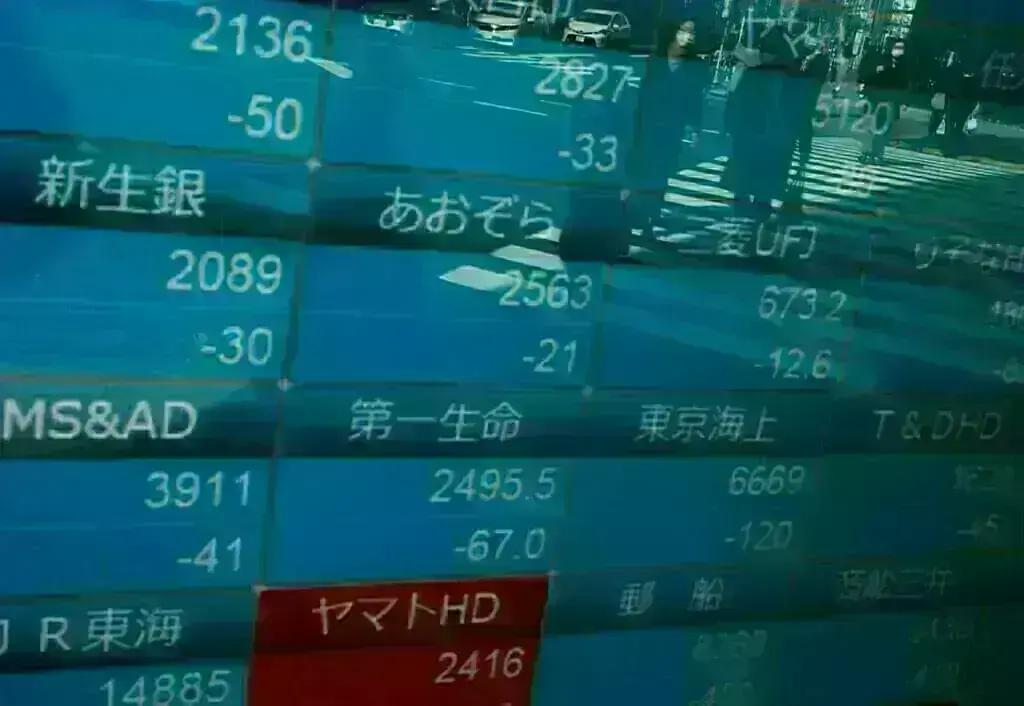
The current hotspot is not broad market beta. It is the steel spread. Washington’s June 1 update to its steel, aluminum, and copper tariff regime kept the protectionist core intact while redrawing the edges for derivative products. That is the kind of policy change traders care about because it does not simply move one stock. It changes who keeps pricing power, who loses margin, and which cross-border supply chains suddenly look less efficient.
The fresh trigger is straightforward. The White House and Reuters both said the U.S. signed a new proclamation on June 1 that lowers some derivative-product tariff rates to 15%, preserves a lower 10% path for products using U.S.-melted or U.S.-smelted metal, adds new derivative categories, and makes the latest changes effective on June 8. Just as important, the June 1 proclamation explicitly lists Japan, South Korea, the United Kingdom, Switzerland, Taiwan, and the European Union in a country-treatment framework for some derivative goods. Traders do not read that as a peace offering. They read it as a more selective industrial filter.
That is why the conversation is no longer just about whether steel is bullish or bearish. The more interesting screen is relative value between U.S. domestic steel names and foreign exporters or downstream manufacturers. U.S.-focused names such as Cleveland-Cliffs, Nucor, and Steel Dynamics are the obvious first watchlist. On the other side, traders are naturally pulled toward Nippon Steel, POSCO-linked exposure, and Europe-listed steel names such as ArcelorMittal or Thyssenkrupp-sensitive supply chains. The point is not that all foreign steel loses equally. The point is that the tariff map is becoming more granular, and the market usually pays up for domestic policy clarity before it pays up for global demand recovery.
Europe matters here because Brussels already moved earlier this year to tighten its own steel shield. Reuters reported in April that the EU agreed to nearly halve tariff-free steel imports and double out-of-quota duties, with officials openly arguing that U.S. tariffs were forcing Europe to defend local capacity. That tells traders something important: the steel trade is no longer a single-country policy story. It is turning into a chain reaction of industrial self-protection. When both Washington and Brussels are defending capacity at the same time, the price signal for globally exposed exporters gets much noisier.
South Korea adds another layer. Reuters’ June 2 market round-up said Korean inflation accelerated to a more than two-year high, bond yields rose, and the market was already rotating sharply among industrial and technology names. That matters because Korea sits in the uncomfortable middle of the new steel map: it is exposed to export manufacturing, exposed to energy and freight pressure, and now exposed to the risk that metals policy keeps favoring local U.S. production over foreign inputs. A tariff regime can be tolerated when global demand is strong and financing is easy. It becomes more painful when inflation, rates, and industrial margins all press at once.
Japan’s role is more nuanced than the usual headline suggests. Japan is named in the U.S. tariff update, which means the market has to separate direct pain from negotiated advantage. That creates a two-speed trade. Some machinery and derivative flows may face a more manageable rate structure, but the bigger message is still that the U.S. wants metal-intensive production to migrate inward unless foreign producers align with American sourcing rules. For traders watching Nippon Steel and the wider Japanese industrial complex, that is not a clean bullish signal. It is a reminder that policy access is now part of valuation.
My cautious view is that this is a dispersion trade before it becomes a directional trade. The market may still try to chase domestic U.S. steel winners, but the cleaner setup is to watch spreads: U.S. mills versus overseas exporters, raw metal beneficiaries versus downstream users, and policy-protected capacity versus globally priced capacity. If that spread keeps widening, the steel tape could outperform broader indices even without a full risk-on backdrop. If it narrows quickly, the market will be telling us that tariffs are becoming administrative noise rather than real margin drivers.
Risk notice: This article is for market commentary and education only. It is not investment advice, and policy-driven moves can reverse quickly as governments revise trade terms or markets reprice demand.
Sources:
White House proclamation, June 1, 2026
White House fact sheet, June 1, 2026
Reuters via Investing.com on the June 1 tariff update
Reuters via MarketScreener on EU steel safeguards
Reuters via Business Recorder on South Korea markets, June 2, 2026
原创文章,作者:financial transaction,如若转载,请注明出处:https://www.fanbi.net/archives/112