

Traders keep staring at crude because geopolitics is loud, but the more interesting energy trade right now is one step downstream. It is not just about the barrel. It is about whether power systems have enough flexibility when heat, LNG flows, wind volatility and grid margins collide at the same time. That is why natural gas, LNG logistics and utility resilience are starting to matter together again across the United States, Europe, Japan and South Korea.
The U.S. piece is straightforward: gas is no longer cheap in strategic terms even when the domestic market looks better supplied than Europe or Asia. Reuters reported on June 4 that U.S. natural gas futures were holding near a one-week low only because softer short-term demand forecasts offset recent output declines, but the same report still said warmer-than-normal weather through June 18 should lift gas burn from power generators. The bigger structural message comes from FERC’s summer reliability assessment, which projects total U.S. gas demand at 101.3 Bcfd this summer, net exports at 17.8 Bcfd, and LNG exports at 15.8 Bcfd, with Europe, Japan and South Korea explicitly cited as key demand destinations. In other words, the U.S. is still the swing supplier, but it is a busier swing supplier than many equity investors treat it as.
Europe is already showing what happens when weather stress meets a thinner renewable cushion. Reuters reported on May 27 that German day-ahead power prices jumped 29% as a heat wave lifted cooling demand while lower wind output forced the system to lean more heavily on gas and coal. That matters beyond one day’s power auction. It is a reminder that even in markets with massive renewable buildout, marginal pricing can still snap back toward thermal generation when the weather stops cooperating. For traders, that keeps utilities, gas infrastructure and flexible generation relevant much longer than the simple energy-transition narrative would suggest.
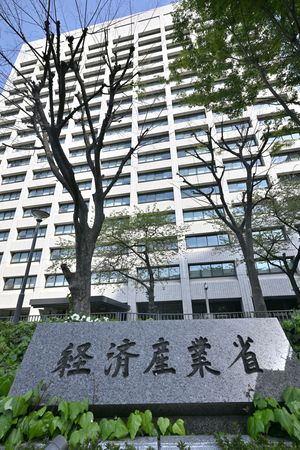
Japan’s signal is quieter but arguably more important. METI’s May 20 summer power-supply plan said reserve rates should stay above the 3% stability threshold nationwide, yet the Tokyo area could fall to just 3.5% in the first half of August under a once-in-a-decade heat wave. The ministry chose not to issue a power-saving request this summer, which sounds calm on the surface. I do not read it as comfort. I read it as a sign that Japan thinks it can get through summer, but only if fuel procurement and plant availability behave. That is not the same thing as having excess slack. In a weather-driven market, a system that is technically adequate can still become financially jumpy very quickly.
South Korea is reacting in the most market-conscious way: by buying optionality and selling capability at the same time. Reuters reported on June 2 that Seoul wants to increase crude and LNG imports from Canada, including a target of 3.4 million metric tons of Canadian LNG. Then Yonhap reported on June 4 that a South Korean consortium won a $2.8 billion deal to build a floating LNG facility for a U.S. offshore project in Louisiana, with Samsung Heavy Industries as the main contractor. That combination is what traders should notice. Korea is not just exposed to LNG price swings; it is also monetizing its industrial position inside the LNG buildout itself.
My cautious view is that this favors energy names tied to flexibility, throughput and bottleneck relief rather than the loudest commodity headlines alone. U.S. gas and LNG infrastructure still matter because export intensity stays high. European power can reprice sharply when weather exposes the limits of intermittent generation. Japan looks less like a crisis trade than a reserve-margin trade, where calm policy language can hide a narrow buffer. South Korea may be the most interesting equity expression because it sits on both sides of the equation, as an LNG buyer and as an exporter of LNG-linked industrial capacity. The market is slowly relearning that in summer energy, optionality is a product.
Risk notice: This article is for market commentary only, not personalized investment advice. Natural gas, LNG, utilities, power-equipment and shipping-related shares can move sharply on weather changes, outages, policy intervention, fuel procurement, freight disruptions, FX swings and broad risk-off moves, so traders should do their own research and assess their own risk tolerance before taking positions.
Sources:
Reuters via Business Recorder: U.S. natural gas futures hold near one-week low on lower demand forecasts (June 4, 2026)
FERC: 2026 Summer Energy Market and Electric Reliability Assessment (May 2026)
Reuters via MarketScreener: German power prices jump as heatwave, lower wind lift supply needs (May 27, 2026)
METI: 2026年度夏季の電力需給対策を取りまとめました (May 20, 2026)
Nippon.com / Jiji Press: Japan Not to Make Power-Saving Request This Summer (May 20, 2026)
Reuters via BOE Report: South Korea seeks to boost crude oil and LNG imports from Canada (June 2, 2026)
Yonhap: S. Korea wins $2.8 bln deal for U.S. LNG offshore plant project (June 4, 2026)
原创文章,作者:financial transaction,如若转载,请注明出处:https://www.fanbi.net/archives/237