
By June 24 and June 25, 2026, Europe’s heatwave had stopped looking like a temporary inconvenience and started behaving like a real market signal. Britain had to pay unusually high prices for extra power, French nuclear output was constrained by heat, and traders began to connect weather stress with a more durable theme: cooling equipment, grid balancing, and retrofit demand.
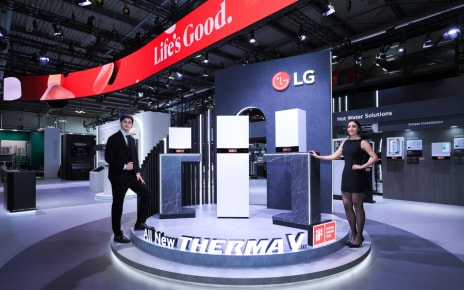
The clearest fresh evidence came on June 25 from Reuters reporting on Europe’s scramble for air conditioners. Samsung told Reuters that Italy, Spain, and France delivered double-digit sales growth in the first half of 2026. LG said air-conditioner production lines at one of its South Korean plants had been running at full capacity since April. Mitsubishi Electric said demand from France, Spain, the UK, and Germany was strong. Reuters also cited International Energy Agency data showing air-conditioner ownership in Europe is still only around 20%, which is exactly why traders see more runway if heatwaves keep arriving earlier and hotter.
This matters because the trade is spreading across regions and asset buckets at the same time. Korea and Japan supply a big part of the hardware story through Samsung, LG, Mitsubishi Electric, and Daikin. Europe supplies the urgency through extreme temperatures and power-price stress. The U.S. angle is the equity-market repricing of HVAC and climate-control names: as of June 24, 2026, Carrier Global was up 16.06% over one month and 40.16% year to date on MarketWatch, showing that investors are not treating cooling as a niche appliance story anymore. They are starting to price it as infrastructure.
My cautious view is that this is a better-quality market theme than a one-day power-price spike, but it is still not a straight line. Europe has structural limits: many buildings are hard to retrofit, installation costs remain high, and political pressure can shift toward efficiency rules rather than pure unit growth. That means the cleaner way to read the theme is not ‘buy every heatwave stock.’ It is to watch who captures the profitable layers: premium HVAC brands, installers, service networks, efficient cooling components, and grid-support equipment.
The cross-market signal is simple. When heatwaves start moving power prices, consumer behavior, and industrial order books at the same time, traders stop treating weather as background noise. They start treating it as capex and earnings.
Risk notice: This article is for market observation only and is not personalized investment advice. HVAC, utilities, industrials, and climate-related themes can move sharply on weather reversals, regulation, power-price normalization, consumer spending weakness, installation bottlenecks, and valuation resets.
Sources:
Reuters via The Business Times: Europe heatwave boosts Asian air-conditioner demand
The Guardian: Britain paid for extra power during the heatwave on June 24, 2026
Samsung: MCE 2026 HVAC portfolio for Europe
LG Electronics: European-market HVAC lineup at MCE 2026
Daikin Central Europe: growing cooling demand in Europe
MarketWatch: Carrier Global share performance
原创文章,作者:financial transaction,如若转载,请注明出处:https://www.fanbi.net/archives/428