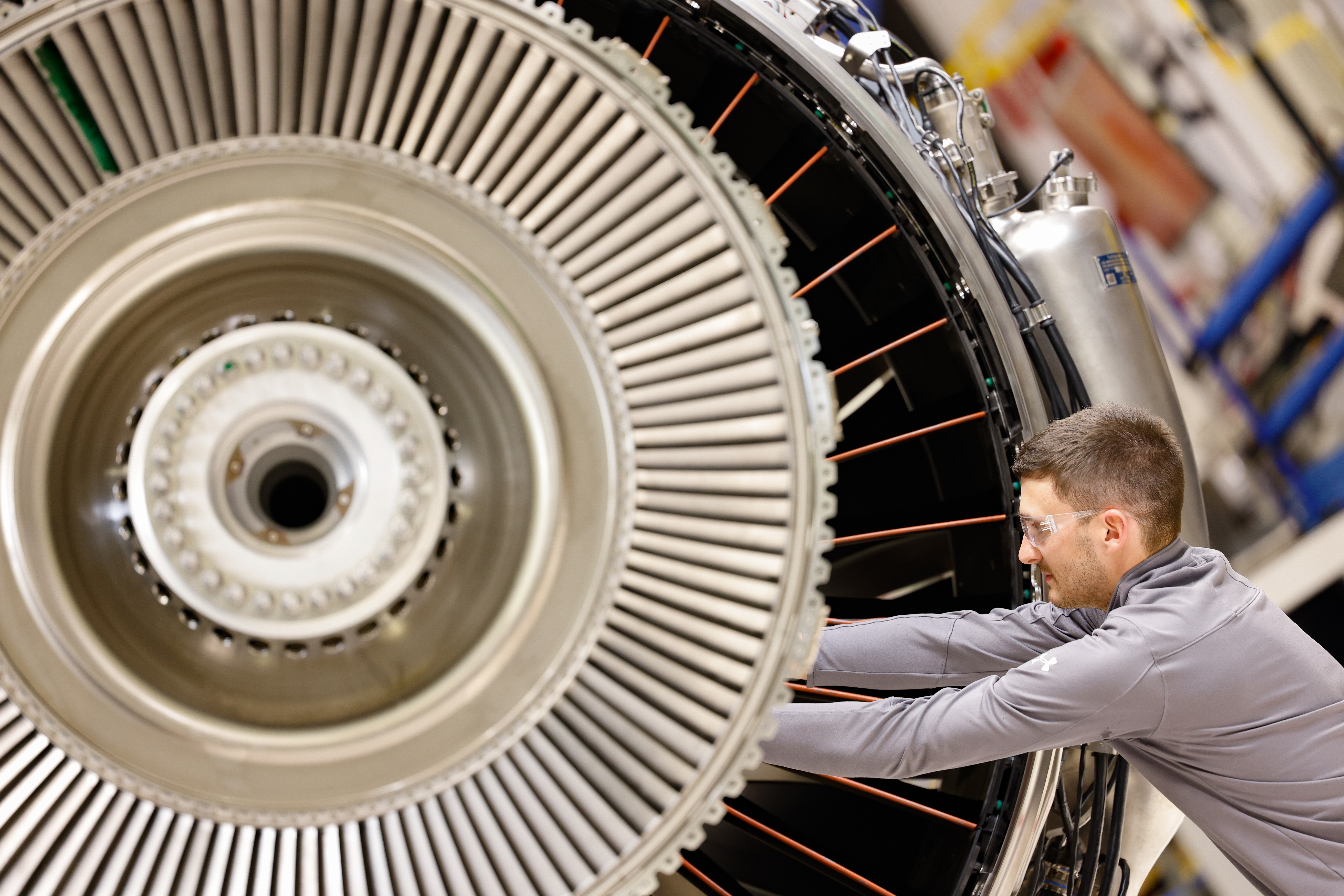

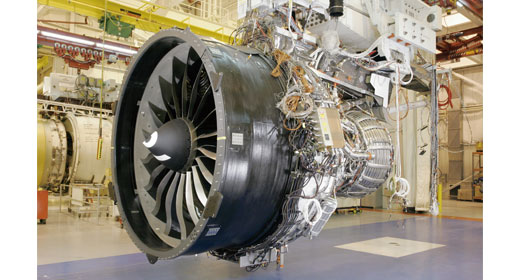
The cleaner market read in aerospace right now is not simply “buy airlines” or “buy plane makers.” It is that propulsion capacity has become the choke point, and choke points usually capture pricing power. Traders keep talking about Airbus and Boeing delivery targets, but the more durable signal is coming from engine assembly lines, spare-parts books, and maintenance queues.
On the U.S. side, GE Aerospace said on May 27 that airlines had not pulled back on engine maintenance or parts orders even as fuel costs stayed elevated, and that spare-parts orders had moved from roughly 30% growth in the first quarter to closer to 40% over the prior two months. That matters because it says the installed base is monetizing faster than the macro scare is biting. GE’s separate March 9 manufacturing update also showed why management is leaning in: another $1 billion of U.S. investment, including more LEAP durability-kit output and more capacity meant to reduce maintenance turnaround times.
Europe is sending the mirror image of that message. Reuters reported on May 19 that Airbus had ordered fresh cost cuts as supply snarls kept squeezing deliveries, while a dispute over engine availability remained part of the stress. Safran’s first-quarter release, meanwhile, showed the cash side of the same bottleneck: LEAP engine deliveries up more than 60%, spare parts up about 29%, and civil-engine services up about 43%. In plain English, the supply chain is still messy, but the companies closest to propulsion and aftermarket work are the ones seeing the fattest throughput.
Japan’s angle is quieter but important. IHI’s June 2 Investor Day kept Aero-Engine, Space & Defense front and center, and the company’s product materials still describe IHI as Japan’s leading jet-engine maker with a 60% to 70% domestic share and Asia’s core maintenance center. That tells traders something useful: Japan is not just an airline or airframe proxy in this theme. It is also an embedded beneficiary of long-cycle engine production, overhaul demand, and defense-adjacent propulsion investment.
South Korea adds the next-leg optionality. Hanwha Aerospace said on May 28 that it will jointly develop a 4,500-pound-class turbofan with KASA, with the broader UAV propulsion push backed by roughly KRW 750 billion in planned investment. That is not an overnight earnings story, but it is exactly the sort of announcement that makes the market price Korea as more than a downstream assembler. It points to a local ambition to move up the propulsion stack, where margins, national-security budgets, and export relevance tend to be stickier.
My cautious view is that the aerospace trade is rotating from glamorous headline demand into industrial scarcity. That usually favors engine OEMs, repair ecosystems, and specialized suppliers more than it favors the companies promising the most aircraft deliveries. The bullish case is that engine scarcity keeps aftermarket margins firm for longer. The bearish case is that a real travel slowdown, a sharper oil shock, or another quality problem turns today’s backlog comfort into tomorrow’s delivery frustration.
Risk notice: This article is for market commentary only, not personalized investment advice. Aerospace and defense names can move sharply on geopolitics, regulation, safety issues, execution delays, and broader risk-off moves, so traders should expect volatility and verify position risk independently.
Sources:
Reuters via WHTC: GE Aerospace maintenance demand holds up (May 27, 2026)
GE Aerospace: Invest another $1B in U.S. manufacturing (March 9, 2026)
Reuters via Investing.com: Airbus targets cost cuts over supply snags (May 19, 2026)
Safran Q1 2026 civil-engine revenue release (April 23, 2026)
IHI Investor Day (June 2, 2026)
IHI Aero Engines product page
Hanwha Aerospace and KASA turbofan program (May 28, 2026)
原创文章,作者:financial transaction,如若转载,请注明出处:https://www.fanbi.net/archives/222