Pharma investors are being pushed into an unfamiliar but increasingly important question: where exactly are the factories? For years the sector was mostly traded through pipeline readouts, patent cliffs and pricing battles. That still matters, but the market is starting to price something more industrial. If Washington is serious about tying tariff relief to domestic production, then manufacturing geography becomes part of valuation, not just background operations.
The policy trigger is clear. Reuters reported on April 2 that the United States would impose a 100% tariff on patented drugs not made domestically and not covered by pricing agreements, while large pharmaceutical companies were given 120 days to announce plans to avoid that tariff. The same report said the tariff rate would be reduced to 15% for drugs produced in the European Union, Japan, South Korea and Switzerland under existing trade arrangements. That is not a small detail. It effectively creates a ranking of political acceptability inside the drug supply chain, and traders are now forced to think in terms of which companies have negotiating leverage, local capacity and room to shift production.
Europe is already signaling how contentious this could get. On June 4, Reuters quoted Roche chairman Severin Schwan describing U.S. tariff pressure as “blackmail” and saying protectionism from the United States and China had become Roche’s biggest geopolitical concern. I think that comment matters because it came from a company large enough to understand both sides of the bargain. Roche is not complaining from a position of weakness; it is warning that the rules of the game are changing. If even the biggest European names view manufacturing coercion as a live risk, the market cannot keep treating cross-border supply chains as frictionless.
Japan’s read-through is subtler but still tradable. Takeda says it currently operates more than 25 manufacturing sites worldwide across small molecules, biologics, plasma-derived products and vaccines. That kind of footprint is no longer just a scale story. It is optionality. A company with multiple sites and a long U.S. operating presence may be better positioned than a single-region producer if tariff talks harden into plant-by-plant bargaining. For Japanese pharma names, the market debate is shifting from whether they have global reach to whether that reach is located in the right jurisdictions.
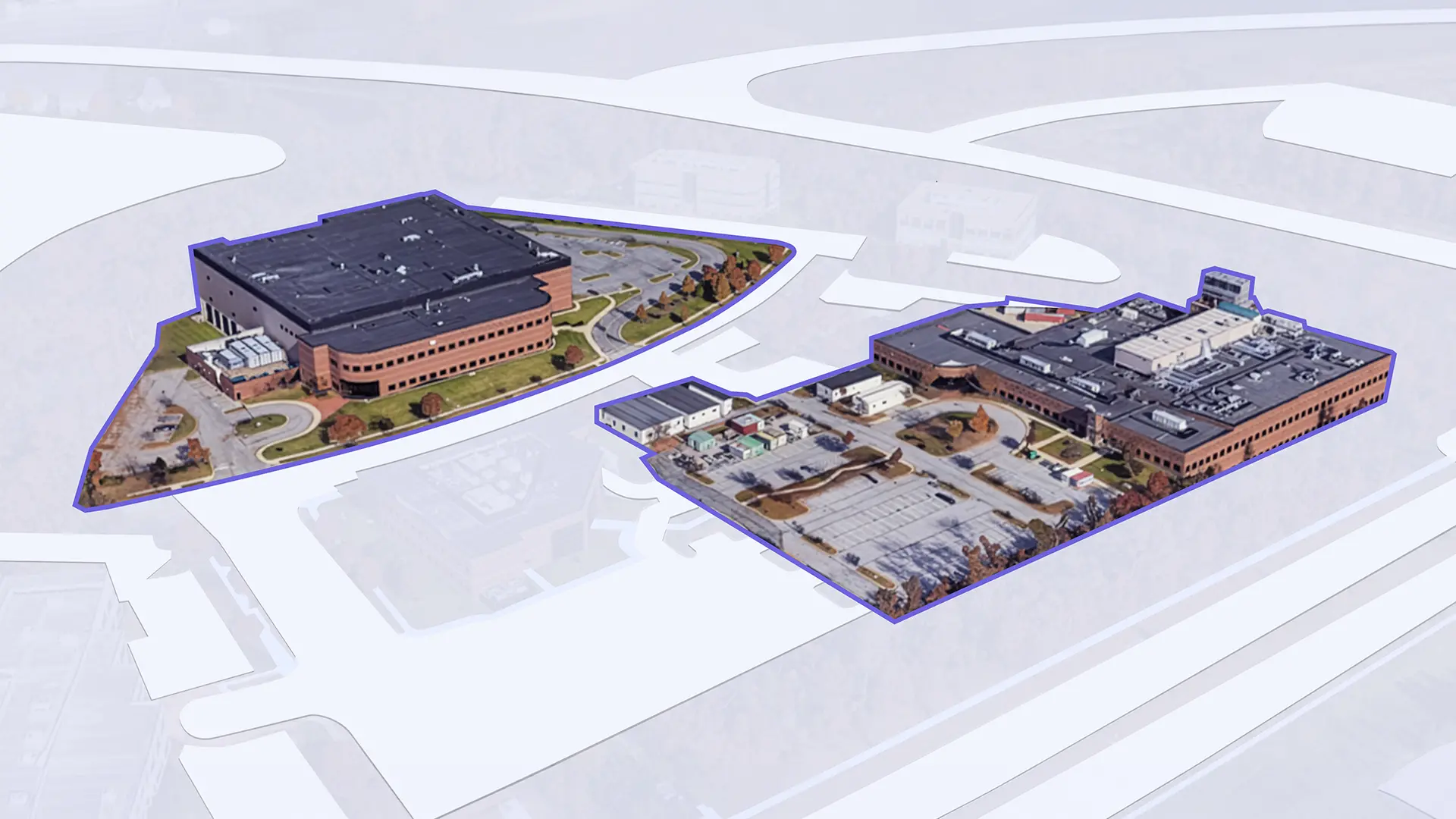
Korea offers the cleanest expression of the new mood because Samsung Biologics is expanding precisely where the policy pressure is strongest. The company said on March 31 that it completed the acquisition of GSK’s Rockville, Maryland manufacturing facility, establishing its first manufacturing presence in the United States and lifting total capacity to 845,000 liters. Then on April 22 it reported first-quarter revenue of KRW 1,257 billion and operating profit of KRW 581 billion, while explicitly tying future growth to U.S. expansion and strategic partnerships. Traders do not need much imagination to connect those dots. In a world where tariff exposure can be reduced by domestic footprint, U.S. capacity is not just a service asset for Korean biotech. It becomes part of the equity story.
My view is that this theme is bigger than a short-lived tariff headline. The market is starting to separate drug companies with resilient manufacturing maps from those that still rely on an old assumption that supply chains will stay politically neutral. That can create opportunities, but it can also produce false confidence. Pharma still faces the usual risks around clinical failures, pricing pressure, reimbursement, regulation and execution, and governments can change the rules faster than factory networks can adapt. Still, the cross-market message is hard to ignore: the next rerating in global pharma may be driven as much by where medicines are made as by what those medicines do.
Risk notice: This article is for market commentary only, not personalized investment advice. Pharmaceutical and biotech stocks can be volatile and may react sharply to tariff policy, pricing negotiations, manufacturing transfers, regulation, supply-chain interruptions, litigation, clinical setbacks and valuation compression. Traders can lose money quickly.
Sources:
1. Reuters via Investing.com on the April 2 U.S. pharmaceutical tariff framework and 120-day clock: https://www.investing.com/news/general-news/drugmakers-face-100-tariff-unless-they-cut-prices-or-produce-drugs-in-us-4596265
2. Reuters via WHTC on Roche chairman Severin Schwan criticizing U.S. tariff pressure on June 4, 2026: https://whtc.com/2026/06/04/roche-chairman-likens-us-tariff-policy-to-blackmail/
3. Takeda global manufacturing page on operating more than 25 manufacturing sites worldwide: https://www.takeda.com/science/products/manufacturing/
4. Samsung Biologics on completing its Rockville, Maryland facility acquisition and establishing its first U.S. manufacturing presence (March 31, 2026): https://samsungbiologics.com/media/company-news/samsung-biologics-completes-acquisition-of-gsks-manufacturing-facility-in-rockville-maryland
5. Samsung Biologics first-quarter 2026 results on U.S. expansion and strategic partnerships (April 22, 2026): https://samsungbiologics.com/media/company-news/samsung-biologics-reports-first-quarter-2026-financial-results
6. Roche media release on its U.S. and Europe AI-enabled pharma infrastructure footprint (March 16, 2026): https://www.roche.com/media/releases/med-cor-2026-03-16
原创文章,作者:financial transaction,如若转载,请注明出处:https://www.fanbi.net/archives/300