Smart glasses are quietly moving out of the science-project bucket and into something the market can price like a real hardware cycle. That does not mean the category is mature. It means the conversation has changed. Traders are no longer focused only on whether AI eyewear looks futuristic onstage. They are starting to ask who controls the distribution shelf, who owns the component bottlenecks, and which listed names actually capture the economics if smart glasses become an everyday accessory instead of a niche gadget.
The U.S. still sets the tone because Meta remains the clearest public proxy. Reuters reported on March 31 that Meta launched two new $499 Ray-Ban prescription smart glasses, broadening the category beyond novelty buyers and into people who already wear corrective lenses. That matters because it pushes smart glasses closer to habitual use rather than occasional experimentation. Reuters also cited IDC data showing global smart-glasses shipments reached 9.6 million units last year and are expected to rise to 13.4 million units in 2026, with Meta accounting for the dominant share. In plain market terms, the category is no longer too small to matter.
Europe’s signal is even more interesting because it is less about hype and more about monetization. EssilorLuxottica said Ray-Ban and Oakley were its top-performing frame brands in the first quarter, helped by AI-enabled glasses developed with Meta. Reuters separately noted that execution on new smart-glasses models is now central to the group’s growth debate. That is an important shift. For years, wearables investors mostly looked at the software platform owner. Now the optical retailer, lens network, and fashion-distribution partner are part of the trade. Europe may not own the AI assistant, but it does own a serious portion of the route to the customer’s face.
Japan’s role is upstream and arguably more durable. Sony said on May 8 that it signed an MOU with TSMC for a strategic partnership on next-generation image sensors, with studies underway around development and production lines in Kumamoto. Sony did not frame that announcement as a smart-glasses story specifically, but the market does not need it to. If wearable AI becomes more camera-heavy, more context-aware, and more always-on, the winners will not be only the consumer brands. The enabling sensor stack becomes a leverage point. Japan’s edge in imaging components means it can benefit even if the finished-device branding happens elsewhere.
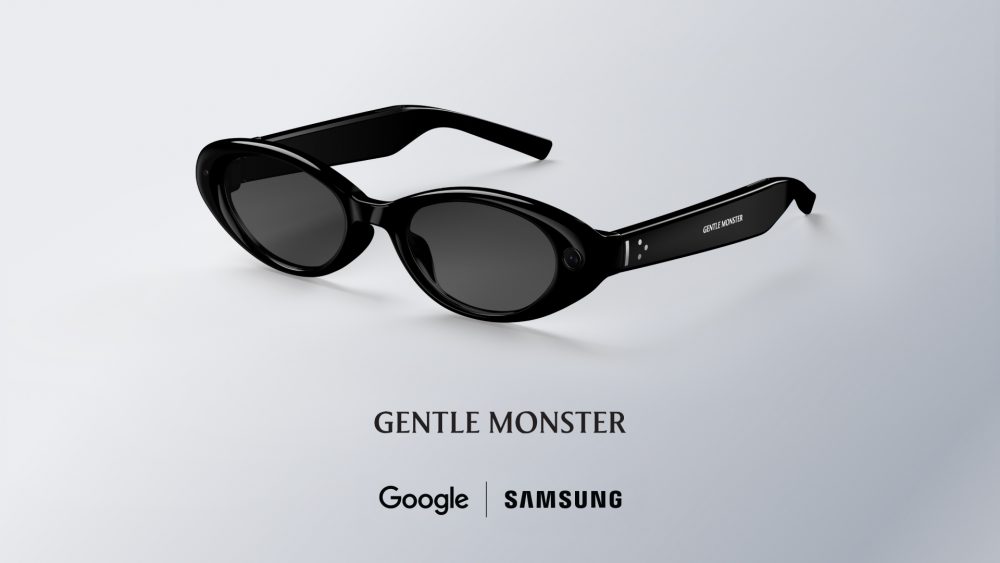
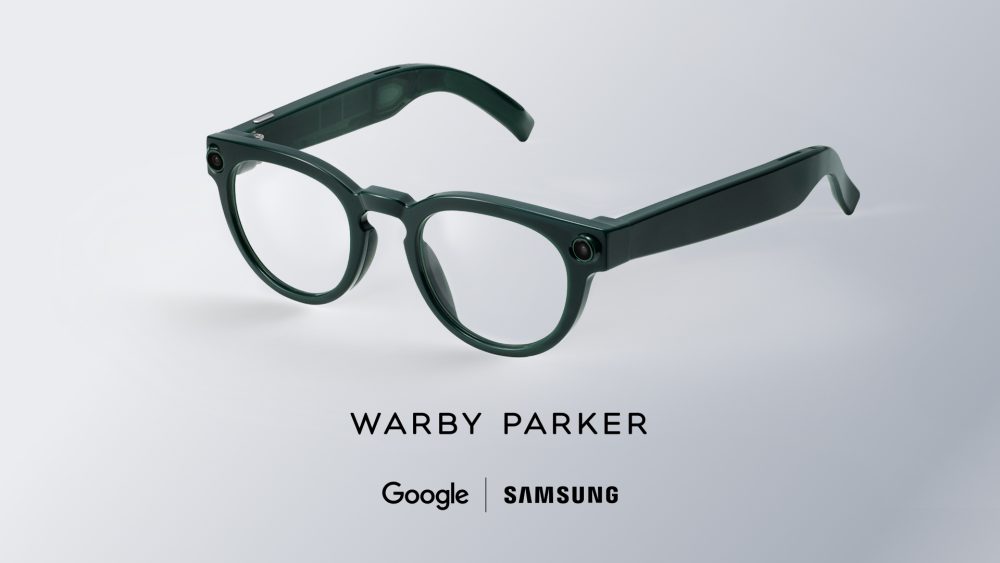
Korea brings the other half of the equation: product execution. Samsung and Google showed their new intelligent eyewear at Google I/O on May 19, built with Gentle Monster and Warby Parker and aimed at launch this fall. The product positioning is telling. Samsung is not presenting the glasses as a weird side project. It is treating them as a companion device in the Galaxy ecosystem, with navigation, translations, notifications, photos, and voice interaction built around daily use. That suggests the smart-glasses market is evolving into the same kind of ecosystem contest already seen in phones, earbuds, and watches. If that happens, Korea is not just supplying memory or displays to someone else’s winner. It is trying to own the user relationship too.
My cautious view is that this theme now deserves more respect than it got during earlier AR hype cycles, but it still does not deserve blind extrapolation. The bullish case is clear: real shipment growth, real retail channels, and credible product launches across multiple regions. The risk is equally clear: comfort, battery life, privacy backlash, and unclear replacement cycles can still slow adoption fast. For traders, the better framework is not to ask whether smart glasses will replace smartphones tomorrow. It is to ask which part of the stack gets paid first if AI eyewear becomes good enough to enter mainstream consumer rotation. Right now, the answer looks less like a single winner and more like a chain trade spanning U.S. platforms, European distribution, Japanese sensors, and Korean hardware.
Risk notice: This article is for market commentary only, not investment advice. Smart-glasses and wearable-AI names can be highly volatile and are exposed to product delays, supply constraints, privacy regulation, and uncertain consumer adoption.
Sources:
Reuters via MarketScreener: Meta unveils new Ray-Ban prescription smart glasses
Reuters via KELO: EssilorLuxottica slips as doubts linger over smart-glasses growth
EssilorLuxottica and Meta expand AI glasses portfolio
Samsung Mobile Press: Samsung and Google give first look at new intelligent eyewear
Google: Intelligent eyewear with Gemini is coming this fall
Sony Group Corporate Strategy 2026
Reddit discussion: smart-glasses release timing and competition
原创文章,作者:financial transaction,如若转载,请注明出处:https://www.fanbi.net/archives/320