

The market conversation around oil has become more interesting than a simple “Brent up, airlines down” template. What traders are watching now is whether the latest oil shock becomes a durable cross-market regime: U.S. crude barrels replacing missing Gulf supply, Asian importers repricing inflation risk, and Europe once again treating energy shares as a hedge rather than a drag.
The most concrete signal came from the U.S. export side. Reuters reported on June 1 that U.S. crude exports hit a record 5.6 million barrels per day in May as Asian and European refiners scrambled for alternatives to disrupted Middle East supply. Asia took 2.45 million bpd and Europe 2.4 million bpd, with Japan alone importing a record 808,000 bpd of U.S. crude. That matters because it shows the trade is no longer theoretical. The market is already rerouting real barrels across the Atlantic and Pacific.
Japan is the cleanest proof that this is becoming a developed-market allocation story, not just an energy headline. Reuters said Japan’s May intake of U.S. crude jumped 32% month on month to a record. For traders, that is a strong tell. Japan usually sits deep inside the traditional Middle East supply chain, so a visible turn toward U.S. barrels signals urgency, not opportunism. My read is that this supports refiners, tankers and near-term crude spreads more than it supports a broad Japanese equity rally, because higher import costs still squeeze the rest of the economy.
Korea is where the oil move starts looking like a policy problem. Reuters reported on June 2 that South Korea’s CPI accelerated to 3.1% in May, the fastest pace in more than two years, with petroleum products up 24.2% and airfare up 33.5%. Reuters also said Korean equities swung sharply lower on June 2 while traders priced in a possible July rate hike from the Bank of Korea. That is the kind of transmission traders care about: oil moving from futures screens into inflation prints, bond yields and equity leadership.
Europe is sending the clearest relative-value message. Reuters reported that the STOXX 600 fell 0.8% on June 2 to a more than one-week low as Middle East risks deepened, yet energy stocks rose 1.7% even while most sectors weakened. That split is important. Europe is highly exposed to imported energy costs, so when energy shares outperform into a weaker tape, the market is effectively using them as an inflation hedge and a cash-flow shelter.
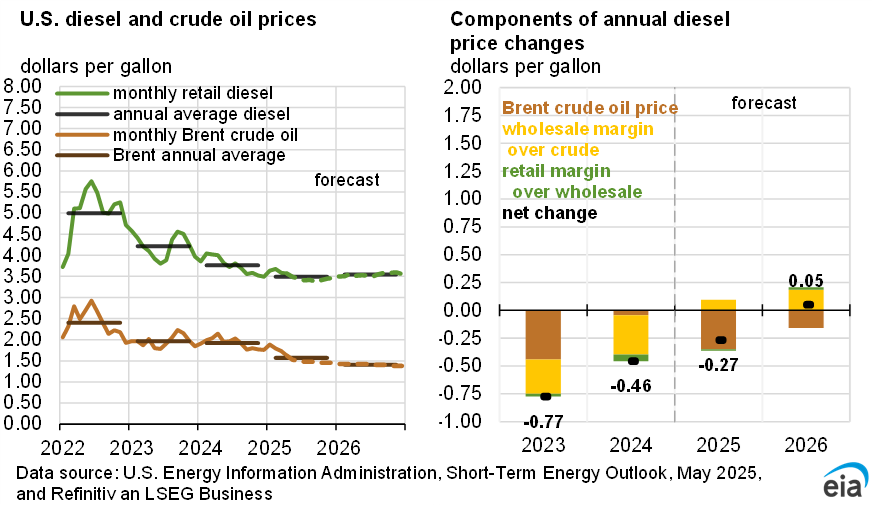
There is also a futures-structure angle that should not be ignored. CME Group noted in May that WTI’s curve remained in steep backwardation even after a temporary ceasefire announcement, a sign that traders still see front-end supply as tight. The EIA’s May Short-Term Energy Outlook reinforced that view by forecasting a 2.6 million bpd global inventory draw this year and average Brent prices around 106 dollars per barrel in May and June. In plain language, the paper market is still saying the squeeze is real even if the far end of the curve is calmer.
Social chatter is lining up with that split view. A heavily upvoted Reddit discussion on June 1 focused on how equities were not reacting negatively to higher oil in the way many traders expected. I would not treat that as fundamental evidence, but it is useful positioning evidence: the market is debating whether high oil is an earnings threat, an inflation threat, or simply another excuse to hide in energy.
My cautious view is that this remains a good relative trade and a worse broad risk-on story. Bullishly, U.S. exports, Japanese buying and European energy leadership all say the oil shock still has economic force. Bearishly, once traders start extrapolating every crude headline into central-bank panic, the setup gets crowded and vulnerable to any detente headline. That is why I would watch freight, spreads, inflation data and sector rotation more closely than dramatic geopolitical commentary. The market usually prices the plumbing before it prices the speeches.
Risk notice: This article is for market observation and trading education only. It is not personalized investment advice and does not guarantee returns. Stocks, futures, crypto contracts and related instruments involve substantial risk, including possible loss of principal, so decisions should be made carefully and independently.
Sources: Reuters on record U.S. crude exports in May; Reuters on June 2 Asia market reaction; Reuters on South Korea CPI and rate-hike expectations; Reuters on Europe’s June 2 sector split; EIA May 2026 Short-Term Energy Outlook; CME Group on WTI backwardation under the supply crunch; Reddit discussion on the market’s muted reaction to higher oil.
原创文章,作者:financial transaction,如若转载,请注明出处:https://www.fanbi.net/archives/108