


Traders spent the last year treating AI memory as a pure winner’s game for Nvidia’s suppliers. This week the story widened. On June 3, U.S. automaker, retail and electronics groups warned Washington that AI data centers are soaking up so much memory-chip supply that consumer goods prices and industrial supply chains could take a hit. That matters because once a shortage jumps from hyperscaler capex into everyday manufacturing, the market stops pricing memory as just another AI enabler and starts pricing it as a tax on the rest of the economy.
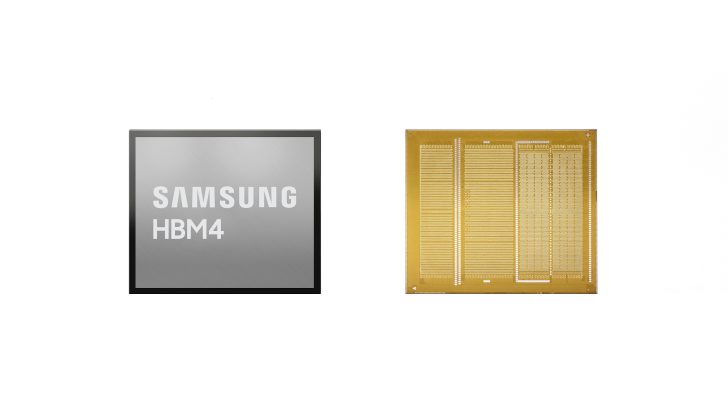
Korea sits at the center of that shift. Reuters reported on June 2 that SK Hynix plans to double wafer capacity over the next five years, while Chairman Chey Tae-won repeated his view that memory bottlenecks could last through 2030. Samsung is pushing the same direction from the product side, showing new HBM4E and broader AI-memory solutions as it fights for share in the highest-margin part of the stack. For equity traders, that keeps the Korea memory complex in the “scarcity asset” bucket even after huge gains, because supply growth is being promised on a multi-year timeline rather than delivered immediately.
The U.S. angle is not only Micron’s stock momentum. Micron’s June 1 Computex release made the more important point: memory and storage are now being designed as the foundation of AI systems, not as interchangeable commodity parts. That sounds bullish for memory makers, but it is also the warning sign for everyone downstream. If the best economics keep flowing to HBM, SSDs and premium server modules, ordinary device, networking and auto customers face either higher bills or second-priority allocation. That is why the “chipflation” narrative has started getting traction beyond semiconductor specialists.
Europe and Japan are exposed in different ways. Europe is trying to answer the problem strategically, with the European Commission’s June 3 tech-sovereignty package and Chips Act 2.0 explicitly aiming to strengthen domestic semiconductor capacity and reduce dependence on foreign infrastructure. Japan’s risk is more embedded in advanced manufacturing and software-defined vehicles. Honda’s February announcement that it will co-develop an automobile SoC with U.S.-based Mythic is a reminder that Japanese industrial champions are pushing more AI compute into cars and edge systems at exactly the moment memory is getting harder to source cheaply. In other words, the shortage is colliding with a broader push to put more intelligence into everything.
The market signal here is subtle but important. This is not simply another “buy AI” tape. It is a spread trade between companies that own scarce memory capacity and companies that consume memory as an input. That can include autos, phones, PCs, networking gear and some industrial electronics. My cautious view is that memory leaders can stay expensive longer than bears expect, but the more interesting second-order trade may be margin pressure on downstream manufacturers that are not yet being repriced for a world where AI soaks up premium supply first.
Risk notice: This article is market commentary only, not investment advice. Semiconductor, hardware and industrial equities can be highly volatile, and supply-chain, policy, valuation and execution risks can change quickly.
Sources: Reuters via Investing.com on automakers and retailers warning about memory shortages; Reuters via MarketScreener on SK Hynix capacity expansion; Micron’s June 1 Computex 2026 release; Samsung Global Newsroom on HBM4E and AI-memory solutions; Reuters via MarketScreener on the EU’s tech-sovereignty and Chips Act 2.0 package; Honda on co-developing an automobile SoC with Mythic; Recent Reddit discussion on AI chipflation.
原创文章,作者:financial transaction,如若转载,请注明出处:https://www.fanbi.net/archives/288

