The AI trade is starting to migrate from the obvious winners into the plumbing underneath them. GPUs still dominate the headlines, and power equipment still carries the scarcity premium, but the next bottleneck is increasingly about how fast data can move inside and between AI facilities. That is why fiber, optical transport, and dense interconnect hardware are getting more attention across the United States, Europe, Japan, and Korea.
The U.S. signal is straightforward. On June 8, 2026, Corning said Amazon would expand its relationship with the company to boost U.S. fiber-optics manufacturing, with roughly 1,000 new advanced-manufacturing jobs planned in North Carolina. Earlier this year Corning also struck a multiyear deal with Meta tied to AI data-center buildout. The message for traders is that hyperscaler AI spending is no longer just a server order story. It is a physical-network build story.
Europe’s read-through comes from Nokia. In March, the company launched a suite of optical products designed for AI-era networks and said the new lineup can cut total cost of ownership while scaling capacity for dense traffic environments. That matters because once AI clusters get larger, the market stops rewarding raw compute alone and starts rewarding the companies that make those clusters usable at scale. Optical efficiency becomes a margin and deployment issue, not a side note.
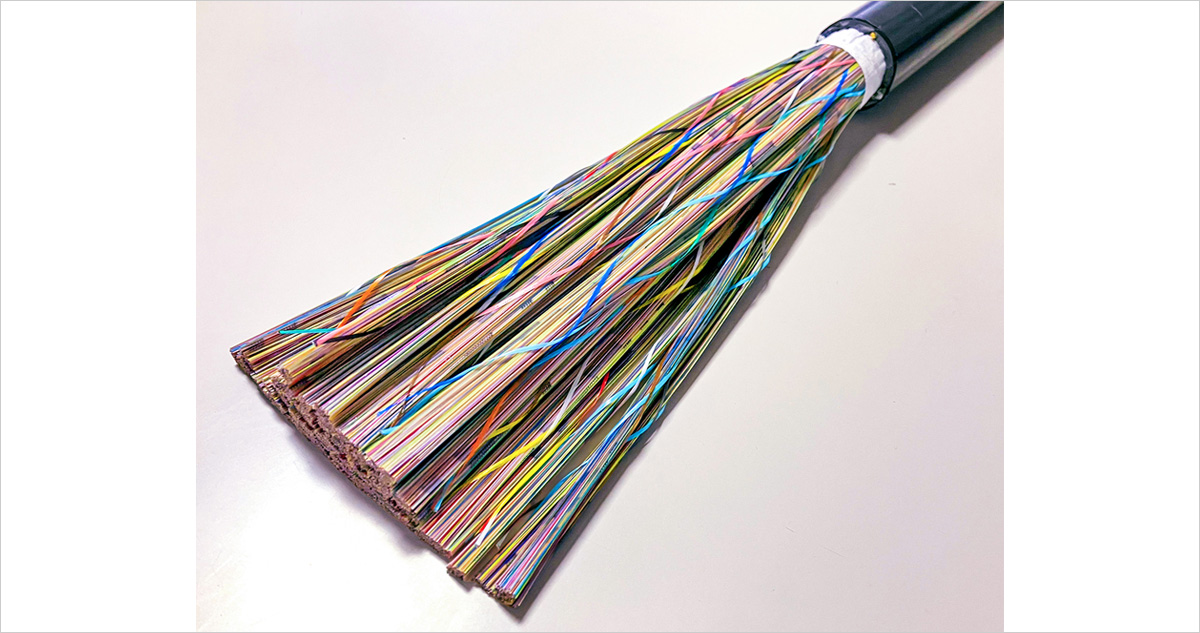
Japan is supplying another clue. Furukawa Electric said its group company Lightera started mass production of 13,824-count optical fiber cable for hyperscale data centers, one of the world’s highest-density cable designs. That is a strong signal that the AI build cycle is forcing the supply chain toward more extreme cable density and faster installation economics. Traders looking only at chip names can miss that the Japanese component and materials layer may capture a quieter but durable part of the capex cycle.
Korea adds the demand-side pressure. NVIDIA and SK Telecom said on June 18 that SK Telecom plans to build a gigawatt-scale AI cloud in Korea using NVIDIA’s AI infrastructure stack, with the first AI factory expected online in 2027. Even before that capacity arrives, the implication is clear: Korea’s AI ambitions will need not only accelerators, but also the fiber backbone and optical transport needed to keep utilization high.
My view is that this is a healthier market frame than simply saying the AI trade is broadening. It is broadening in a very specific direction: toward the companies that connect, route, test, and densify AI traffic. That does not mean every cable or networking name deserves a rerating, but it does mean the market is moving from a compute-only lens toward a systems lens.
The risk is that investors get ahead of deployment timing. Hyperscaler commitments can stretch across years, carrier spending can slip, and optical suppliers can still run into pricing pressure even when volumes rise. If AI capex pauses or gets sequenced more slowly than expected, the interconnect trade could correct sharply because expectations for these second-derivative winners are starting to rise.
Sources: Corning on Amazon’s fiber-optics manufacturing agreement | Corning and Meta on U.S. data-center fiber expansion | Nokia on optical solutions for AI-era networks | Furukawa Electric on ultra-high-density optical cable production | NVIDIA and SK Telecom on Korea AI infrastructure
Risk notice: This article is market commentary for informational purposes only. It is not personalized investment advice or a recommendation to buy or sell any asset.
原创文章,作者:financial transaction,如若转载,请注明出处:https://www.fanbi.net/archives/471