One of the clearest market hotspots on June 26 is what I would call chipflation: the moment when the AI boom stops looking like pure upside and starts looking like a cost shock. Reuters’ European market note said Apple will keep iPhone prices steady but raise some iPad and MacBook prices because it can no longer absorb surging memory and storage costs tied to the AI data-center buildout. The same Reuters note said Micron’s latest results showed customers locking in $22 billion of memory-chip supply, a sign that pricing power in the memory chain is tightening rather than easing.
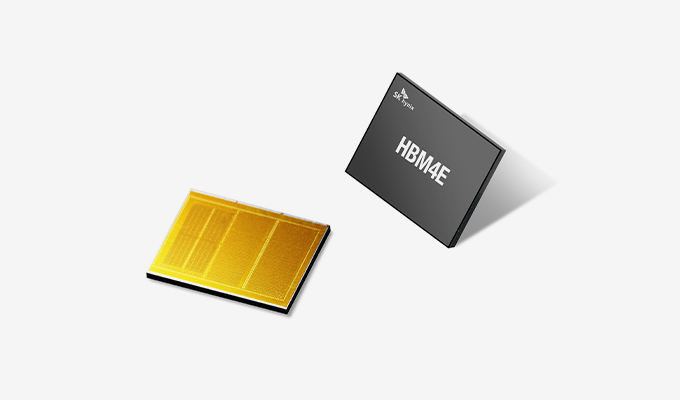
That matters because memory is no longer just another semiconductor sub-sector. It has become the part of the AI stack that can either validate the rally or expose how crowded it has become. Micron’s official June 25 results were framed as record third-quarter numbers, and the company said HBM4 is already in high-volume shipments for a lead customer platform. In Korea, SK hynix said on June 18 that it had already shipped 12-layer HBM4E samples to major customers, reinforcing the view that the high-bandwidth-memory race is still the industry’s most important margin engine.
But the trade is not one-way anymore. Reuters reported that Kioxia shares fell 12% in Tokyo on June 26 as AI-related stocks sold off, even though the company remains one of Japan’s key memory names and has ridden the broader AI spending wave. The same Reuters report said Kioxia is considering a stock split and wants to list American depositary shares in the United States around the beginning of its next financial year, while noting that SK hynix is also pursuing a large U.S. listing. That combination is important: Asian memory champions still want more U.S. capital access, but public investors are getting more selective about what they will pay for that access.
The Europe signal is quieter but still relevant. Reuters’ June 26 market preview said European markets were also set for a weaker open as the AI mood cooled, which matters because Amsterdam- and Paris-listed chip tool names still trade as downstream expressions of the same memory cycle. Europe is not leading this story, but it is still in the blast radius whenever investors start asking whether AI demand is becoming inflationary for the rest of the hardware chain.
My cautious view is that this is healthy for the market even if it feels ugly in the short term. When the memory trade was rising almost in a straight line, it was easy to confuse scarcity with permanent pricing power. Now traders are being forced to separate real structural winners from names that were simply being lifted by AI enthusiasm. That usually leads to a more durable market, but only after volatility clears out the weaker hands.
Risk notice: This article is for market observation only and is not personalized investment advice. Semiconductor, AI infrastructure, exchange-listed equities, ADRs, and related futures can move sharply on earnings, inventory swings, customer concentration, export controls, valuation compression, policy headlines, listing plans, and sudden reversals in global risk appetite.
Sources:
Reuters via WTVB: Morning Bid: chipflation
Reuters via WTVB: Kioxia shares slump 12% as AI-related stocks fall
Micron: Record results for the third quarter of fiscal 2026
SK hynix: Ships samples of 12-layer next-gen HBM4E
KIOXIA: Flash storage innovations for AI at HPE Discover Las Vegas 2026
原创文章,作者:financial transaction,如若转载,请注明出处:https://www.fanbi.net/archives/437