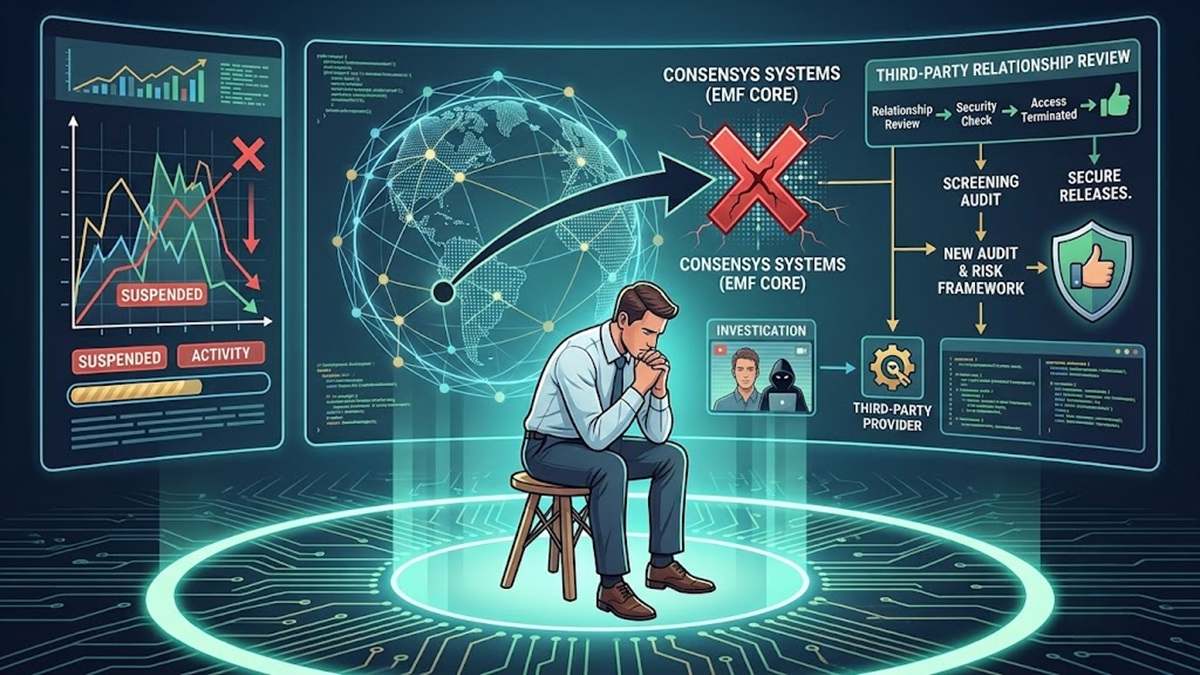
Reports that Consensys unknowingly used a developer linked to North Korea put a familiar crypto risk back in focus: sensitive systems can be exposed through contractors, outsourcing chains and access permissions even when the core product keeps operating normally.
The trading point is not to assume a protocol, wallet or token is impaired whenever a security story appears. The point is to ask what access existed, how long it existed, whether production code or customer data were affected, and how quickly permissions were revoked. Those details decide whether the event is headline noise or an operational risk signal.
Wallet infrastructure deserves special attention because it sits close to user behavior. Even when a company says no funds or code were misused, traders should review device hygiene, browser extensions, seed-phrase storage, hardware-wallet use and approval revocations. Security risk often compounds during volatile markets because users move faster and click more carelessly.
For token and equity exposure, the checklist is different. Watch public incident updates, audit commentary, app-store or extension changes, and whether liquidity providers widen spreads on related assets. A contained access incident should not be treated the same as an exploit, but it still belongs in the risk dashboard.
Trading view: vendor-access stories are usually not immediate buy-or-sell signals. They are prompts to reduce operational complacency and to avoid using leverage on assets whose infrastructure assumptions you have not checked.
Sources: TradingView mirror of Cointelegraph brief; Crypto Economy coverage; CoinDesk background on DPRK developer targeting.
Risk notice: This article is educational and does not make claims beyond cited public reports. Crypto security news can change quickly, so traders should verify official updates before acting.
原创文章,作者:financial transaction,如若转载,请注明出处:https://www.fanbi.net/archives/3793