
OKX’s support materials describe TP/SL as a conditional order framework for futures trading. A trader can preset a trigger price and an order price, and the system submits the closing or entry order when the selected price type reaches the trigger. OKX also explains that users can choose last price, mark price or index price as the trigger reference.
The workflow is simple in the app: open the futures trading page, choose the contract and amount, then check TP/SL before opening a position or add TP/SL from the open-position area after the position exists. The important choice is not the button sequence. It is whether the trigger should follow last price, mark price or index price, because liquidation and stop activation may not use the same reference.
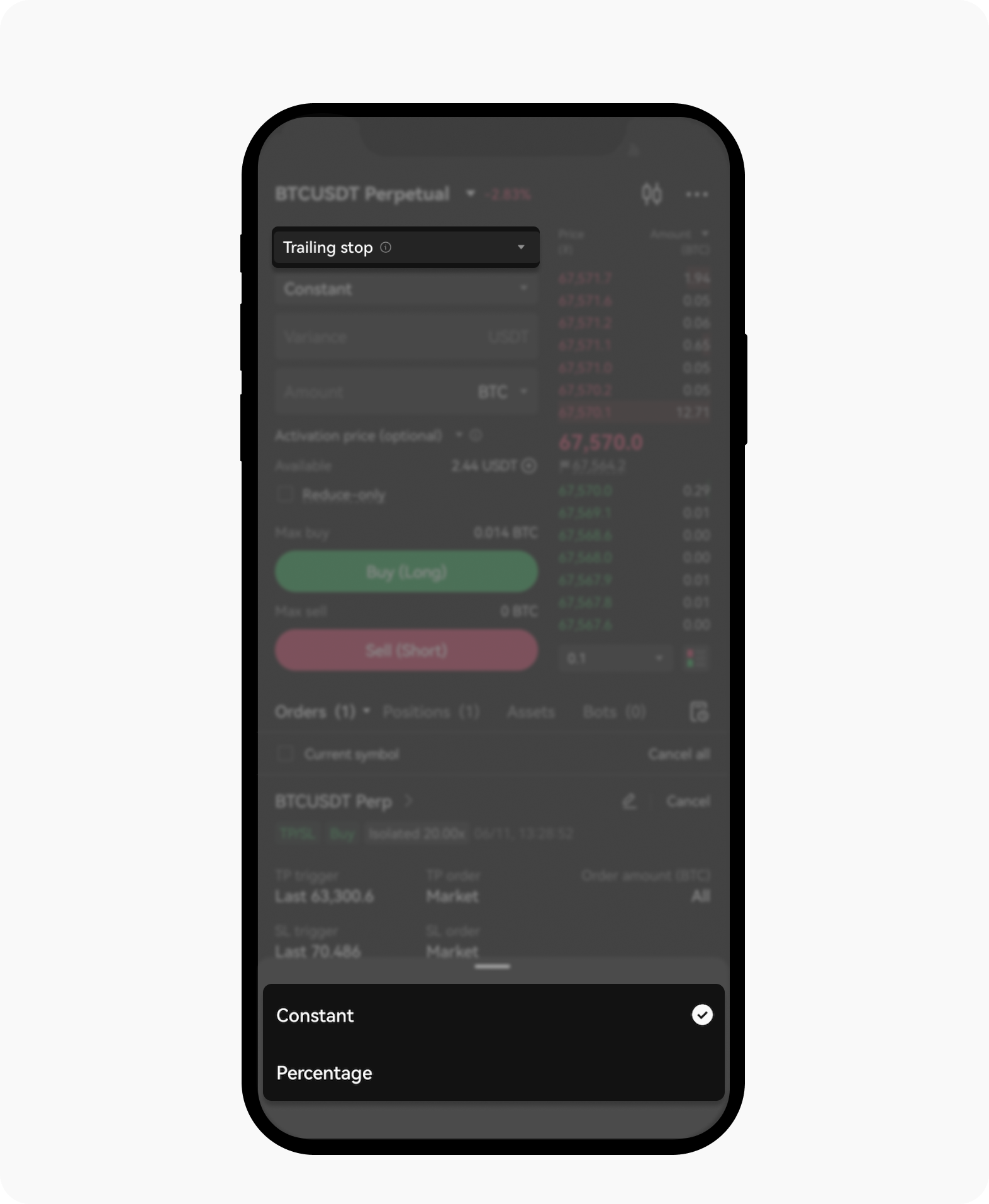
For a fixed stop, a market exit gives faster execution but can slip during a fast move. A limit exit provides price control but may not fill if the market gaps through the limit. A trailing stop is different: OKX describes it as a TP/SL order whose trigger moves in the favorable direction and only closes if the market reverses by a preset variance.
A practical setup for a volatile contract can use three layers: a hard stop sized to the maximum loss allowed, a take-profit target that reduces exposure rather than assumes the exact top, and a trailing stop only after the position is already profitable. Traders should also avoid setting the stop so close that normal spread noise triggers it repeatedly.
Risk notice: Platform tools reduce manual delay but do not remove market risk. Trigger orders can miss fills, limit exits can remain unfilled, and high leverage can liquidate a position before a trader has time to adjust.
Sources
原创文章,作者:financial transaction,如若转载,请注明出处:https://www.fanbi.net/archives/3206