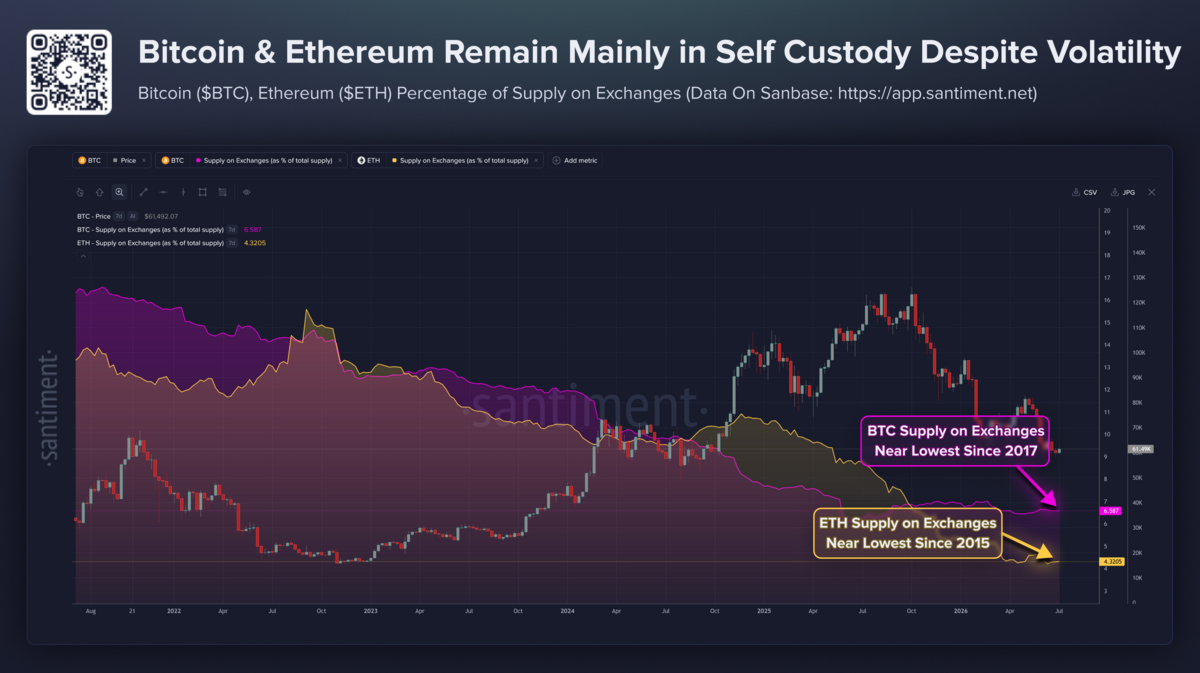
Falling exchange reserves are back in the crypto-market conversation, but the signal needs more discipline than it did in earlier cycles. CoinDesk reported on July 9 that bitcoin and ether exchange supplies have reached historic lows, while Santiment’s community data showed BTC exchange supply near its lowest level since 2017 and ETH near its lowest since 2015. In simple terms, fewer coins appear immediately available for sale on centralized venues.
That can be constructive for market structure, especially if spot demand returns. Lower exchange balances may mean more coins are held in self-custody, staking, cold storage or institutional custody. But it does not automatically force prices higher. Today’s market also includes spot ETFs, OTC desks, derivatives collateral, wrapped assets and custody flows that do not show up as old-style exchange inventory.
For traders, the better checklist is confirmation-based. Watch whether price rises while open interest stays orderly, whether funding remains neutral rather than crowded, whether ETF flows support spot demand, and whether large exchange inflows appear during rallies. A clean accumulation setup usually needs lower available supply plus improving demand, not one data point alone.
The risk is chasing a headline after liquidity has already thinned. Thin exchange supply can amplify upside if buyers return, but it can also increase volatility when leveraged accounts are forced to sell. Treat reserves as background market structure, then let price, volume and derivatives data decide the trade plan.
Sources: CoinDesk bitcoin and ether exchange-reserve report; Santiment exchange-supply insight.
Risk notice: This article is for market observation and trading education only. It is not investment advice, and crypto assets can move sharply against leveraged positions.
原创文章,作者:financial transaction,如若转载,请注明出处:https://www.fanbi.net/archives/1827