

The next defense trade may not be about who builds the flashiest missile. It may be about who can actually deliver steel in the water on time. That is why shipbuilding is starting to matter again as a market story, not just as a policy talking point. The latest signals from the United States, South Korea, Japan and Europe all point to the same conclusion: naval and maritime capacity is becoming an industrial bottleneck, and bottlenecks usually create winners.
The U.S. side of the story has become much more explicit. The White House’s maritime action plan says Washington wants historic cooperation with South Korea and Japan as part of rebuilding American shipbuilding. Breaking Defense then reported on May 29 that a proposed $1.85 billion U.S. funding line could support studies and even the first vessel work involving Japanese or South Korean builders, with discussions involving Hanwha, HD Hyundai, Samsung Heavy, Mitsubishi Heavy, Kawasaki Heavy and Japan Marine United. That is not a symbolic gesture. It is an admission that allied yard capacity may matter before domestic recovery is complete.
South Korea is moving like it knows this window is open. Yonhap reported on June 2 that Seoul and Washington began a new round of security talks that included expanding shipbuilding cooperation, while Seoul also keeps pushing its nuclear-submarine roadmap. On the same day, Korea JoongAng Daily reported that a Hanwha Ocean-HD Hyundai Heavy Industries consortium is competing against Germany’s Thyssenkrupp Marine Systems for Canada’s roughly 60 trillion won submarine program, with a preferred bidder expected in late June. Traders should notice the pattern: Korean shipbuilders are no longer just export stories in commercial vessels. They are becoming alliance infrastructure.
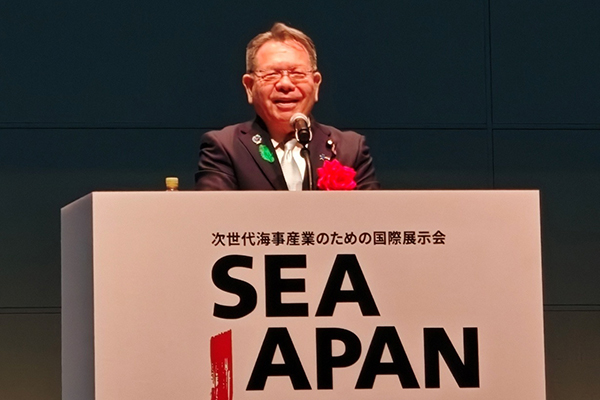
Japan’s role is more subtle but still important. Japan’s transport ministry said at SEA JAPAN 2026 in April that the country’s shipbuilding sector was attracting major attention and that Tokyo wants to establish a winning formula as expectations rise for next-generation ships. That fits a broader Japanese effort to treat shipbuilding as economic security again, not a sunset industry. Japan still lacks Korea’s scale at the very top end of global yard capacity, but if the U.S. increasingly values reliable allied production and repair capability, Mitsubishi Heavy, Kawasaki Heavy and related marine suppliers could matter more than the market has been used to assuming.
Europe is in the story in a less comfortable way. Germany’s TKMS is still a formidable submarine competitor, and the Canada contest proves Europe is not absent from the naval-capacity trade. But the more interesting signal is that Europe’s advantage may be selective rather than broad. If Washington ends up channeling meaningful work toward Korean and Japanese yards, the market could start valuing Asian build speed and industrial flexibility more aggressively than Europe’s legacy naval prestige.
My cautious view is that this is bullish for shipbuilders with real yard throughput, export credibility and government alignment, but less bullish for investors who assume every defense name benefits equally. In this phase, the prize is not just order announcements. It is trusted production capacity. Korea currently looks best placed because it already has scale, recent export momentum and live geopolitical demand. Japan looks earlier in the rerating cycle, which can be attractive but also demands patience. Europe still has pockets of strength, but it may not control the tempo. The market is starting to relearn an old rule: strategy matters, but shipyards matter more when everyone suddenly needs hulls.
Risk notice: This article is for market commentary only, not personalized investment advice. Shipbuilding, defense and industrial shares can move sharply on politics, budget changes, export-license decisions, contract delays, labor shortages, steel prices, foreign-exchange swings and broad equity-market risk, so traders should do their own research and assess their own risk tolerance before taking positions.
Sources:
White House: America’s Maritime Action Plan (2026)
Breaking Defense: OMB could use $1.85B in reconciliation to buy foreign-made ships (May 29, 2026)
Yonhap: South Korea and U.S. begin talks including shipbuilding cooperation (June 2, 2026)
Korea JoongAng Daily: Korea’s submarine bid in Canada pits Hanwha-HD Hyundai against Germany’s TKMS (June 2, 2026)
Japan MLIT: SEA JAPAN 2026 remarks on shipbuilding revival and next-generation vessels (April 22, 2026)
原创文章,作者:financial transaction,如若转载,请注明出处:https://www.fanbi.net/archives/234