
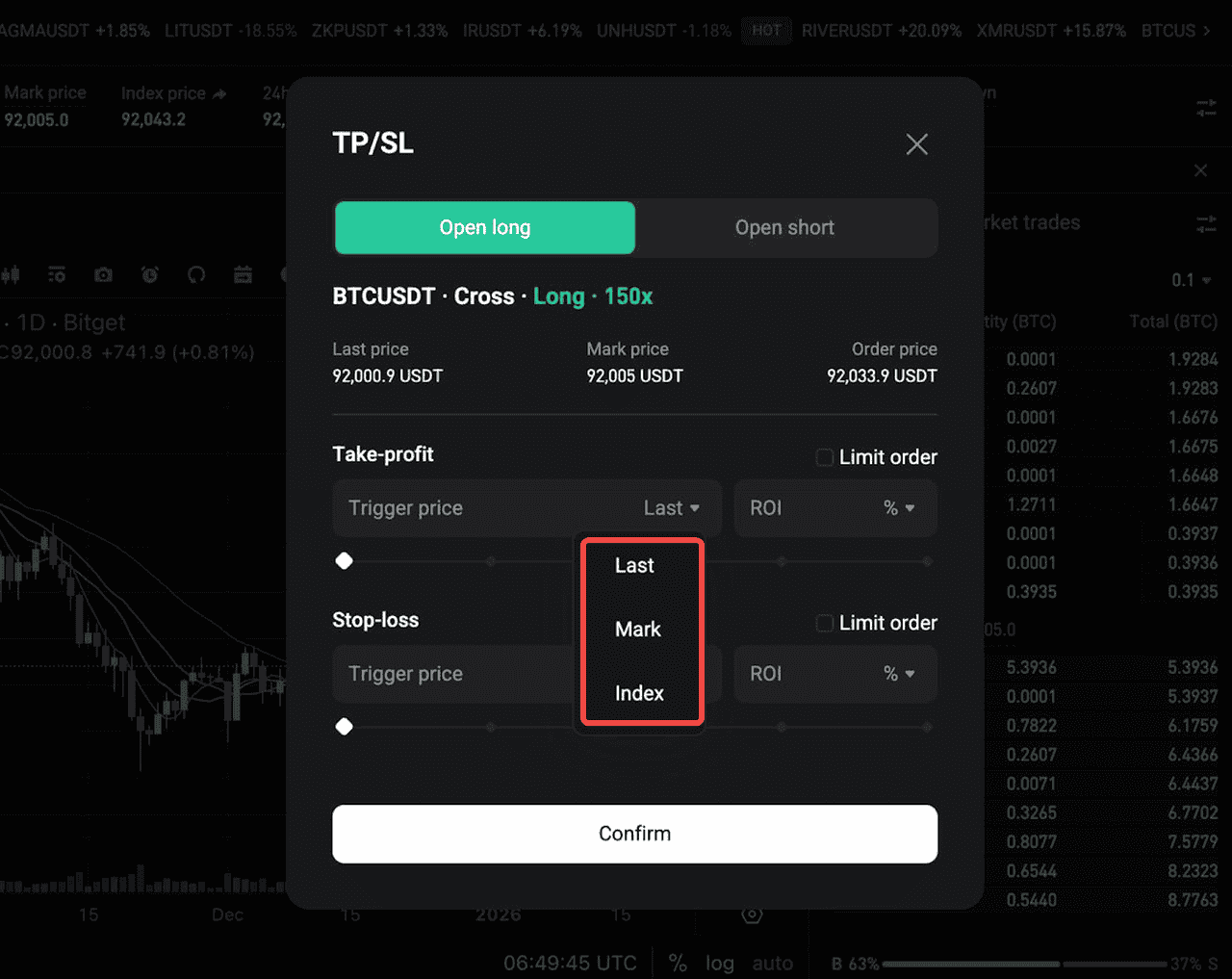
Bitget’s futures help center gives traders a useful reminder: a take-profit or stop-loss order is not only about the exit level. The trigger price matters too. Bitget lists last price, mark price and index price as TP/SL trigger options, each with a different trade-off.
Last price reacts fastest because it follows the most recent trade in the futures market. That can suit short-term traders, but it can also create unwanted triggers during thin liquidity or sudden wicks. Mark price is smoother and is tied to risk control and settlement logic, which can reduce noise but may react more slowly in fast markets. Index price tracks a weighted spot-market reference and can reduce single-venue distortion, but it may lag the futures book during sharp moves.
A practical setup starts before the order ticket. Decide whether the stop is meant to protect against normal volatility, a broken technical level or liquidation risk. Then choose the trigger type that matches that purpose. For many traders, using mark price for risk protection and last price for very short-term execution scenarios is easier to explain than mixing settings randomly.
The important limitation is that TP/SL does not guarantee the exact fill price. Bitget notes that orders can fail, partially fill or execute away from the trigger during extreme volatility. That is why position size and leverage still matter even when an exit order is already placed.
Sources: Bitget TP/SL trigger-price guide; Bitget on TP/SL triggered but not executed; Bybit TP/SL setup reference.
Risk notice: Futures trading uses leverage and exit orders may not fill as expected in fast markets. This guide is educational information, not official customer support or investment advice.
原创文章,作者:financial transaction,如若转载,请注明出处:https://www.fanbi.net/archives/3877

