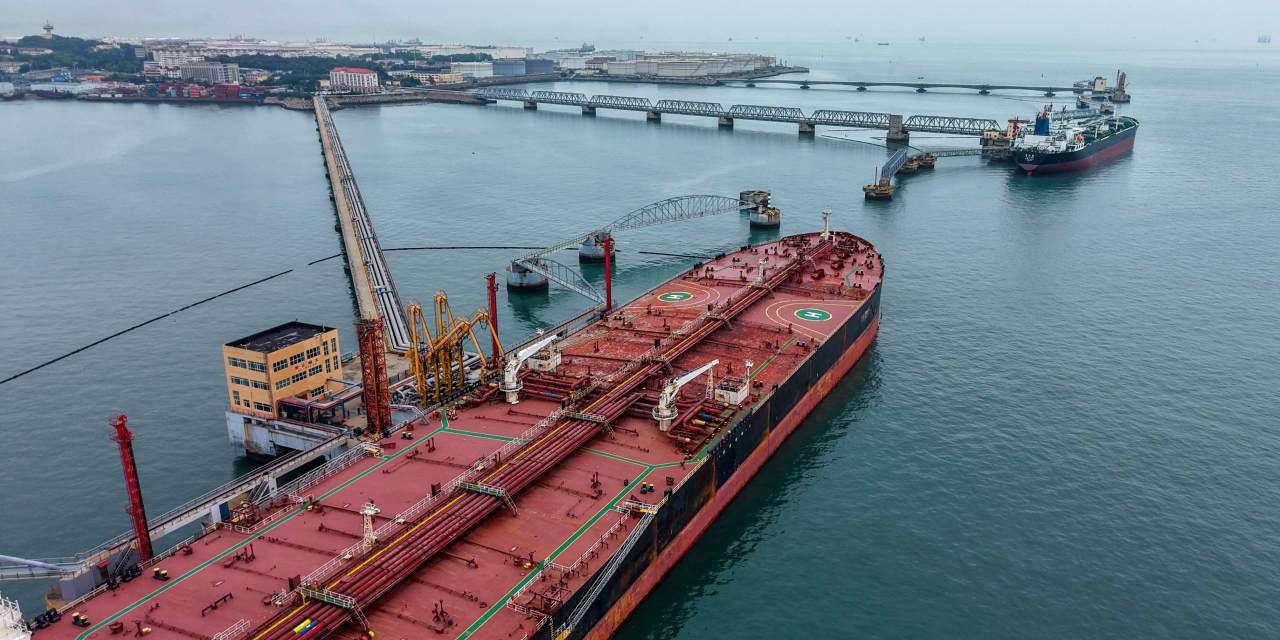
Crude oil has become one of the clearest cross-market risk signals of the week. MarketWatch reported that oil prices jumped sharply over the week as U.S.-Iran tension renewed supply fears, while CME Brent futures quotes still showed an elevated forward curve. That combination matters for traders because energy shocks can move inflation expectations, rates, equity-index futures and commodity margin requirements at the same time.
The immediate mistake is to treat a geopolitical oil rally like a normal technical breakout. Headlines around the Strait of Hormuz, tanker traffic and potential supply disruption can create price gaps that stop orders do not always handle cleanly. When volatility expands, the same contract size represents a larger dollar risk, and overnight positions carry more event risk than chart-only traders often expect.
Crude also feeds into broader markets. Higher energy prices can pressure airlines, transport, consumer stocks and inflation-sensitive rate trades, while oil producers may react differently depending on costs and hedging. For index futures traders, the point is not to become an oil specialist overnight, but to know when crude volatility is large enough to change Nasdaq, S&P 500 and Treasury-yield assumptions.
A practical plan starts with contract sizing. Check whether the product is full-size, mini or micro, understand daily price limits and exchange margin changes, and avoid adding leverage after a large headline move. Calendar spreads and options can be useful, but only when the trader understands liquidity and expiry risk.
Sources: MarketWatch oil-price coverage; CME Brent crude oil futures quotes; EIA Short-Term Energy Outlook.
Risk notice: Futures and commodity products can lose more than the initial margin. Geopolitical headlines can move prices before stops execute.
原创文章,作者:financial transaction,如若转载,请注明出处:https://www.fanbi.net/archives/3727