
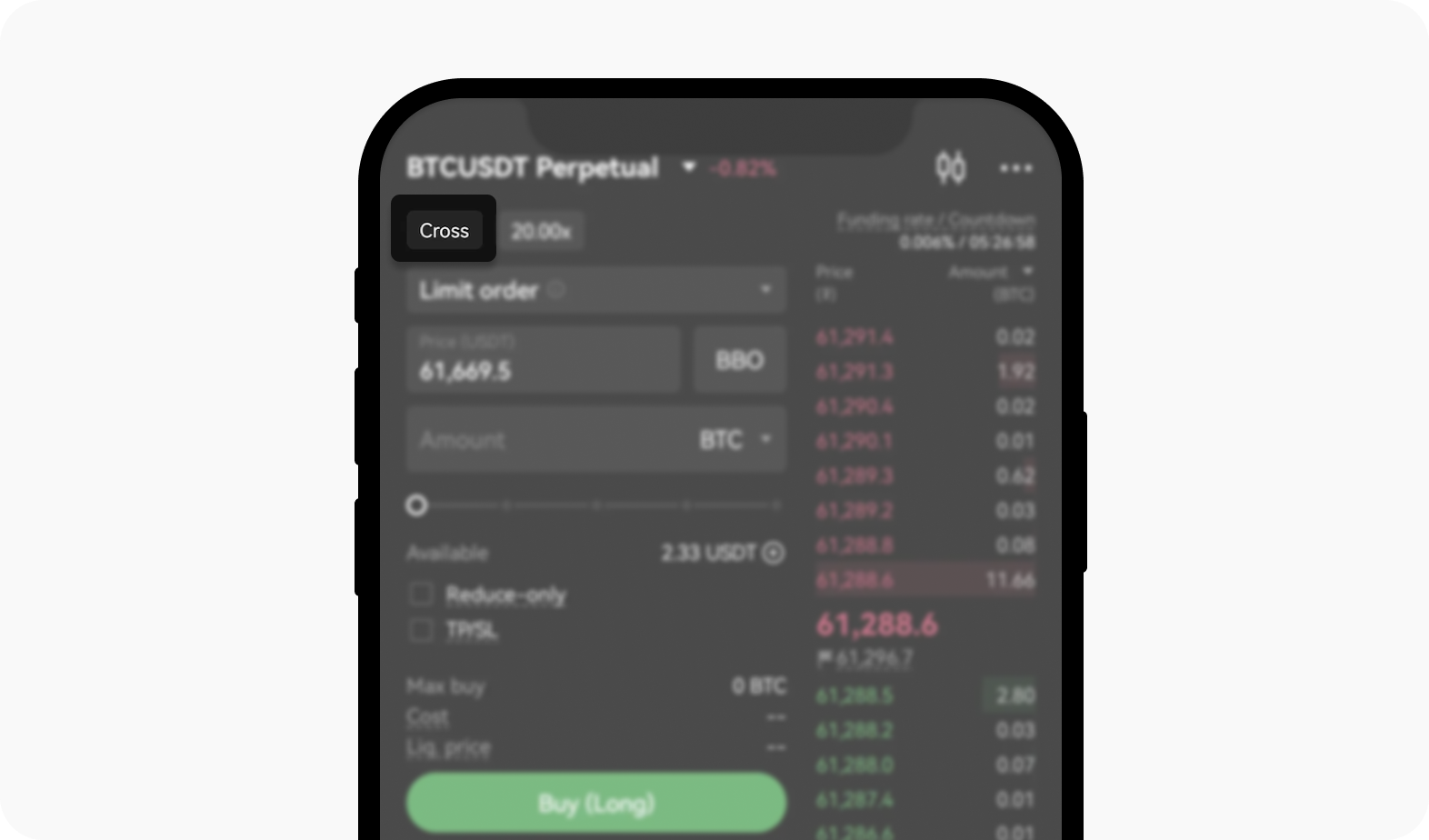
OKX support explains that traders can choose cross or isolated margin modes from the trading interface and adjust leverage before placing a futures trade. In its futures-mode materials, OKX describes cross margin as sharing available margin across products settled in the same crypto, while isolated margin separates the risk of each position.
The practical difference is not just a button setting. Cross margin can reduce the chance that one position is liquidated by letting unused equity support it, but it can also allow a bad trade to consume more of the account. Isolated margin limits the damage to the position’s assigned margin, but the position can liquidate faster if the trade is not funded enough.
Beginners often choose the mode based on confidence rather than structure. A cleaner rule is to use isolated margin for event trades, experimental strategies, or positions where the maximum loss should be capped tightly. Cross margin can be more suitable for hedged books, basis trades, or experienced traders who monitor total account risk continuously.
Before opening a contract, check leverage, liquidation estimate, maintenance margin, stop order location, and whether other positions depend on the same collateral. Margin mode should be chosen before the trade, not after volatility rises. Changing settings under stress often leads to larger mistakes.
Sources: OKX guide to cross and isolated modes; OKX futures cross-margin trading rules.
Risk notice: Futures and perpetual contracts are leveraged products. Margin mode can change liquidation behavior but cannot remove market risk.
原创文章,作者:financial transaction,如若转载,请注明出处:https://www.fanbi.net/archives/3347

:quality(82)/7fa781f78a484d659d65e687cc998033)