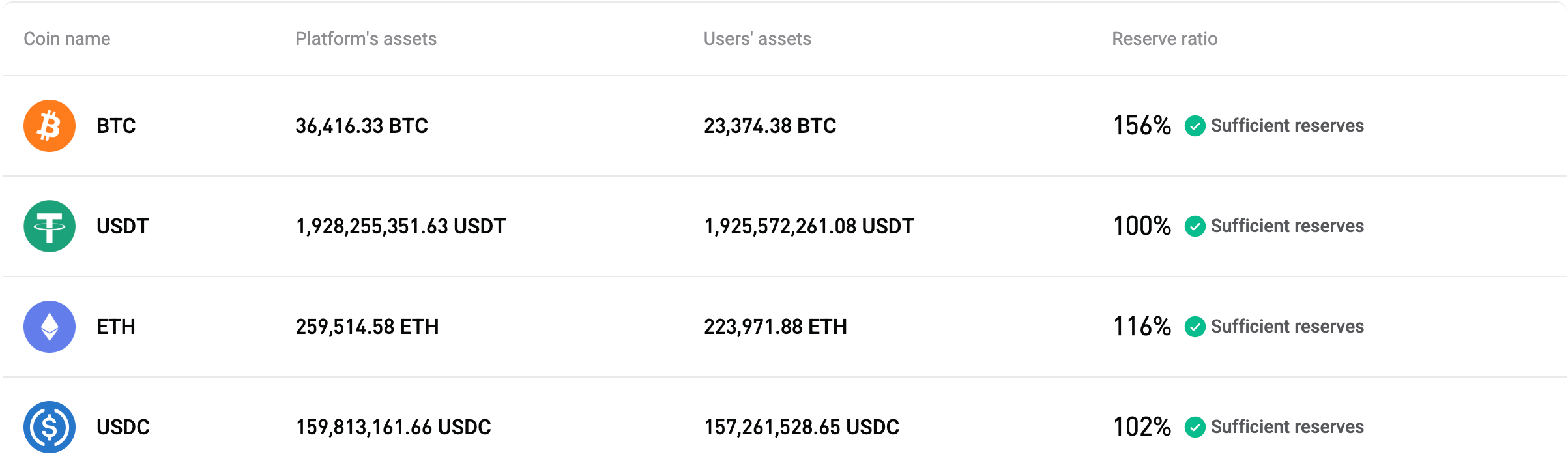
Bitget said its June 2026 Proof of Reserves update was the 43rd report since the program began in December 2022, and listed a total reserve ratio of 123% in the support-center notice. The exchange also describes proof of reserves as a method using cryptographic proof, public wallet ownership and regular audit-style disclosure to show that liquid on-chain reserves meet or exceed user assets.
For traders, the useful part of a proof-of-reserves page is not the headline percentage alone. A reserve ratio above 100% is a starting point, but it should be checked against asset-level coverage, update frequency, whether liabilities are included, and whether the exchange explains methodology clearly enough for users to reproduce or verify parts of the process.
Proof of reserves also does not replace basic account-risk controls. It does not guarantee future solvency, eliminate operational risk, or prove that every listed product has deep liquidity during stress. A trader who uses futures, copy trading, earn products or margin should still separate long-term holdings from active trading collateral and avoid keeping every asset on one venue.
A practical comparison framework is simple: reserve disclosures, security controls, withdrawal history, market depth, fee clarity, and the tools available for risk reduction. The strongest exchange for a beginner may not be the same venue that best fits a high-frequency futures trader.
Sources: Bitget June 2026 Proof of Reserves notice; Bitget Proof of Reserves explainer.
Risk notice: This article is for exchange due-diligence education only. It is not a recommendation to use any specific platform. Digital-asset venues can face liquidity, operational, regulatory and cybersecurity risks.
原创文章,作者:financial transaction,如若转载,请注明出处:https://www.fanbi.net/archives/2881