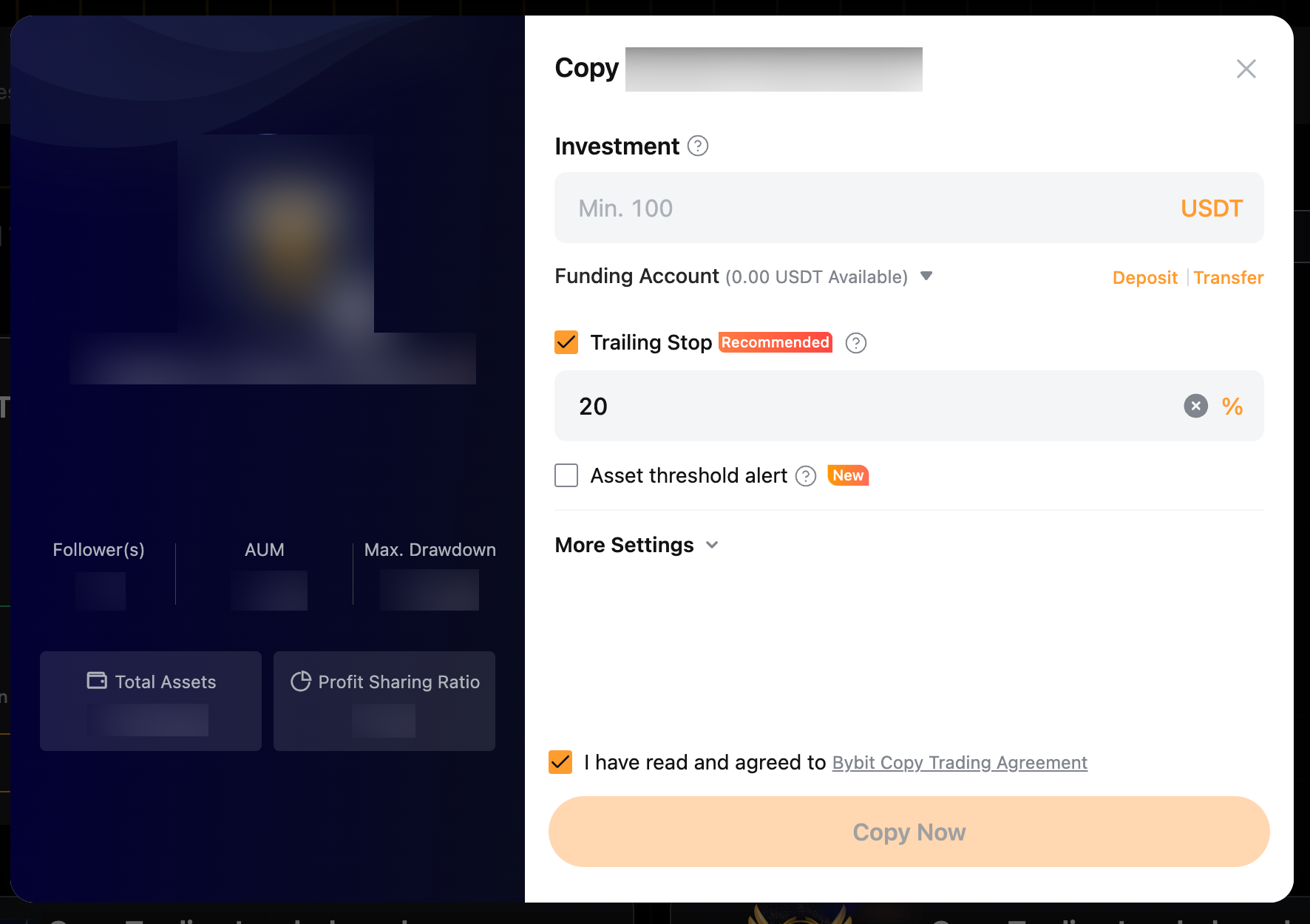
Bybit updated its Copy Trading Classic parameter-settings article on July 10, 2026, explaining that followers choose a copy mode and set copy-trade parameters before following a Master Trader. That framing matters because copy trading is not a passive guarantee; it is a workflow where the follower still decides how much account risk to transfer to someone else’s strategy.
The first decision is allocation. A fixed amount can cap damage more clearly, while proportional copying may keep trade size aligned with the master account but can still become uncomfortable if the master trader uses aggressive leverage or trades during thin liquidity. Followers should decide the maximum capital at risk before studying return screenshots.
The second decision is the exit rule. Copy-trading settings should be checked for stop-loss, take-profit, maximum position exposure and what happens when the master trader adds to losing positions. If the platform allows parameter edits, review them after major volatility rather than leaving the first setup untouched.
The third decision is strategy fit. A trader with high win rate but large hidden drawdowns may not fit a small account. A lower-return strategy with tighter loss limits can be more usable if the follower’s real goal is learning position management rather than chasing the top leaderboard.
Sources: Bybit Copy Trading Classic parameter settings; Bybit Copy Trading FAQ.
Risk notice: This article is for platform-use education only. Copy trading can amplify losses, and past performance of a copied trader does not guarantee future results.
原创文章,作者:financial transaction,如若转载,请注明出处:https://www.fanbi.net/archives/2883