

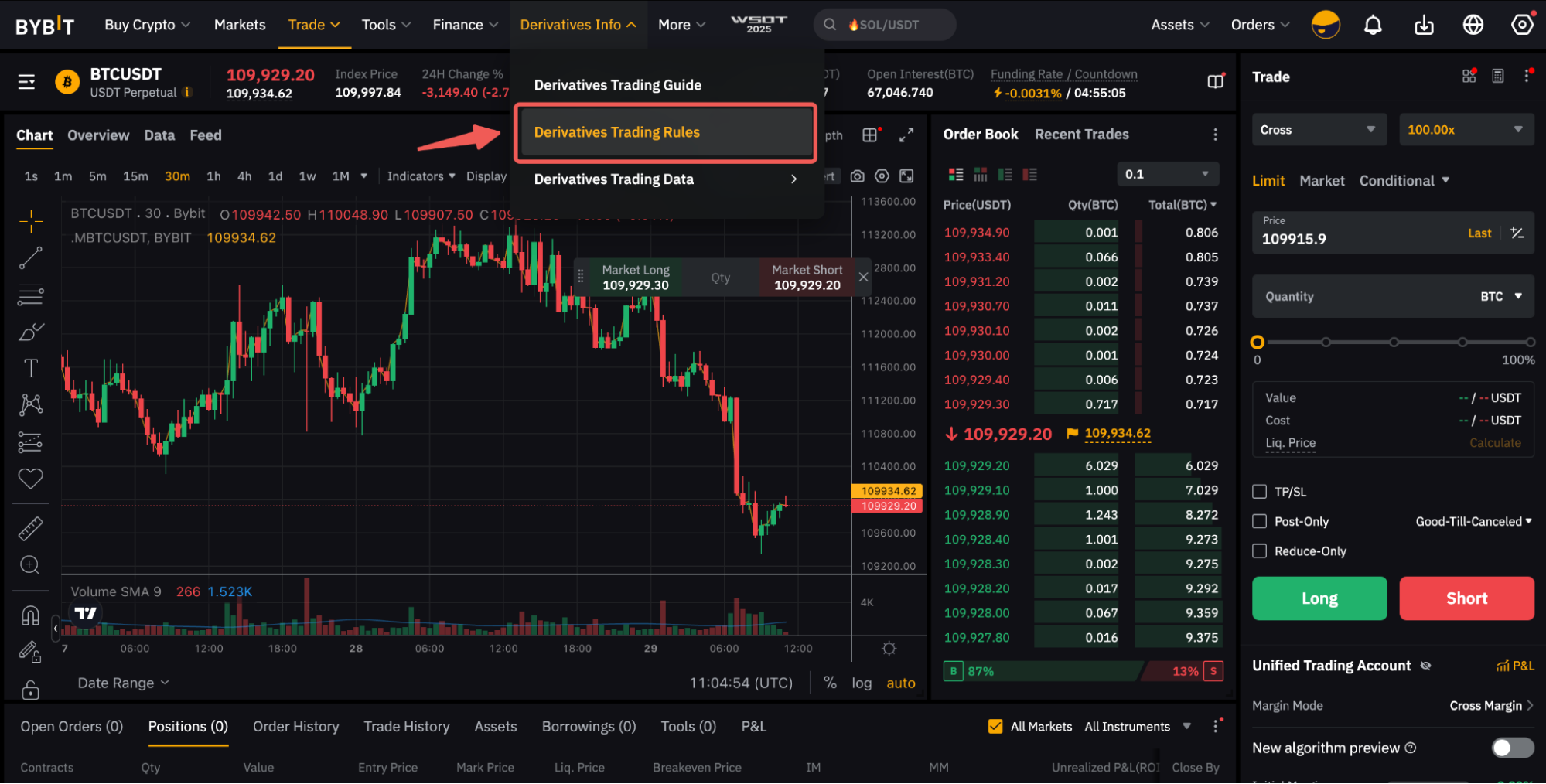
A futures order ticket can make leverage feel simple, but the real pre-trade question is not just direction. Bybit’s order-cost guide defines order cost as the funds required to place an order, influenced by position value, leverage and fee rate, including initial margin and trading fees. That is the number traders should check before clicking buy or sell.
Risk limits add another layer. Bybit describes risk limits as a tool to curb excessive exposure in volatile markets, especially when large leveraged positions could create losses beyond the liquidated trader’s margin and push risk into insurance-fund or auto-deleveraging mechanics.
The practical workflow is to read the ticket from bottom to top: order size, notional value, leverage, initial margin, estimated open and close fees, liquidation price, mark price trigger, risk-limit tier and whether reducing leverage would make the position easier to manage. If the order only looks acceptable because leverage is high, the trade is probably too large.
For beginners, a lower-risk habit is to size the position from maximum acceptable loss first, then choose leverage last. Leverage should reduce capital locked in the trade; it should not be used to justify a position that would be too large in spot terms.
Sources: Bybit order-cost guide; Bybit risk-limit guide; Bybit futures trading rules.
Risk notice: Futures and perpetual contracts can liquidate quickly. This article is general education and does not recommend using leverage or any specific exchange.
原创文章,作者:financial transaction,如若转载,请注明出处:https://www.fanbi.net/archives/2039

