

Nvidia’s Computex week has become more than another product launch cycle. The market is now treating it as a fresh stress test for the entire AI semiconductor chain, from U.S. leadership in chips and software to Korean memory, Japanese test equipment and European lithography capacity. That is why traders are not only watching NVDA anymore. They are mapping the second and third-order beneficiaries.
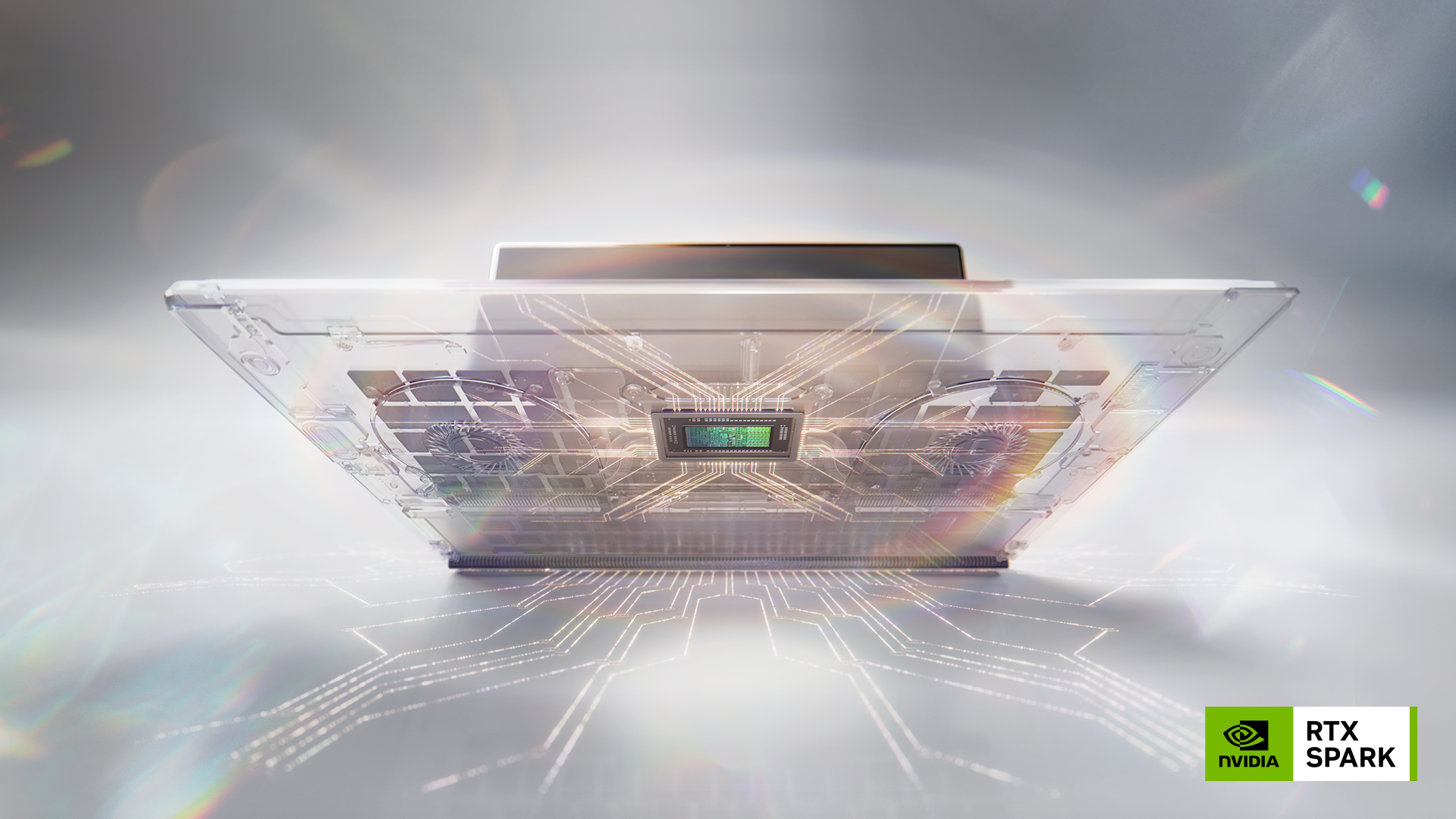
The immediate catalyst is clear. Reuters reported on June 1 that Nvidia unveiled the RTX Spark chip for laptops and desktops and framed 2026 as a turning point for agentic AI on personal computers. Nvidia also said early adopters of its Vera CPU include OpenAI, Anthropic and SpaceX, which matters because it widens the story beyond data-center GPUs into a broader compute stack. My read is that the market likes this not only because of product novelty, but because it extends Nvidia’s narrative into another total-addressable-market argument.
Korea remains the most obvious transmission channel. Reuters reported on May 27 that SK Hynix crossed the $1 trillion market-value mark after Samsung and Micron, with analysts arguing memory demand could exceed supply through 2028. That matters for traders because the hottest part of the AI chain is no longer only the compute chip itself. High-bandwidth memory has become a pricing-power asset, and when the bottleneck sits in HBM, Korean memory names stop trading like ordinary cyclicals and start trading like scarce infrastructure.
Japan is where the market has begun to price the picks-and-shovels angle more aggressively. Reuters reported on May 27 that Tokyo Electron and Advantest were among the biggest contributors as the Nikkei hit a record intraday high before caution emerged over the pace of the AI rally. That is an important nuance. Japan is confirming the supply-chain breadth, but it is also signaling that the trade is getting crowded enough for profit-taking to appear even on bullish news.
Europe adds the capacity constraint piece. Reuters reported on May 20 that ASML CEO Christophe Fouquet sees the chip market staying tight for the foreseeable future as AI demand outpaces what the industry can produce. Separately, ASML said in its April 15 Q1 2026 results that demand for chips is outpacing supply and customers are accelerating capacity expansion plans for 2026 and beyond. Put simply, Europe is not the speculative edge of this story; it is the machinery layer that tells traders whether the buildout is temporary excitement or a longer capital cycle.
There is also a sentiment signal worth noting. Reddit discussion after Jensen Huang’s Taipei keynote quickly turned into supply-chain watchlists rather than pure NVDA fandom, with traders naming memory, servers, optics and software as follow-on trades. I do not treat social chatter as evidence of fundamentals, but it is useful evidence of positioning behavior: the market is rotating from a single-ticker obsession into ecosystem chasing.
My cautious view is that the AI chip chain still looks like global market leadership, but it is no longer a clean, cheap leadership trade. The bullish case is that Nvidia’s push into AI PCs and agents broadens demand while ASML and HBM shortages keep supply tight. The bearish case is that too many regions are now expressing the same theme at stretched valuations, which raises the risk of sharper air pockets whenever guidance fails to over-deliver. For traders, that means the next signal matters more in order books and capex visibility than in keynote applause.
Risk notice: This article is for market observation and trading education only. It is not personalized investment advice and does not guarantee returns. Stocks, futures, crypto contracts and related instruments involve substantial risk, including possible loss of principal, so decisions should be made carefully and independently.
Sources: Reuters on Nvidia’s June 1 Computex launch; NVIDIA Newsroom on RTX Spark; Reuters on Nvidia’s Korea partner dinner; Reuters on SK Hynix joining the $1 trillion club; Reuters on Japan’s Nikkei chip-stock rally; Reuters on ASML’s supply warning; ASML Q1 2026 results; Reddit discussion of the keynote supply-chain trade.
原创文章,作者:financial transaction,如若转载,请注明出处:https://www.fanbi.net/archives/103