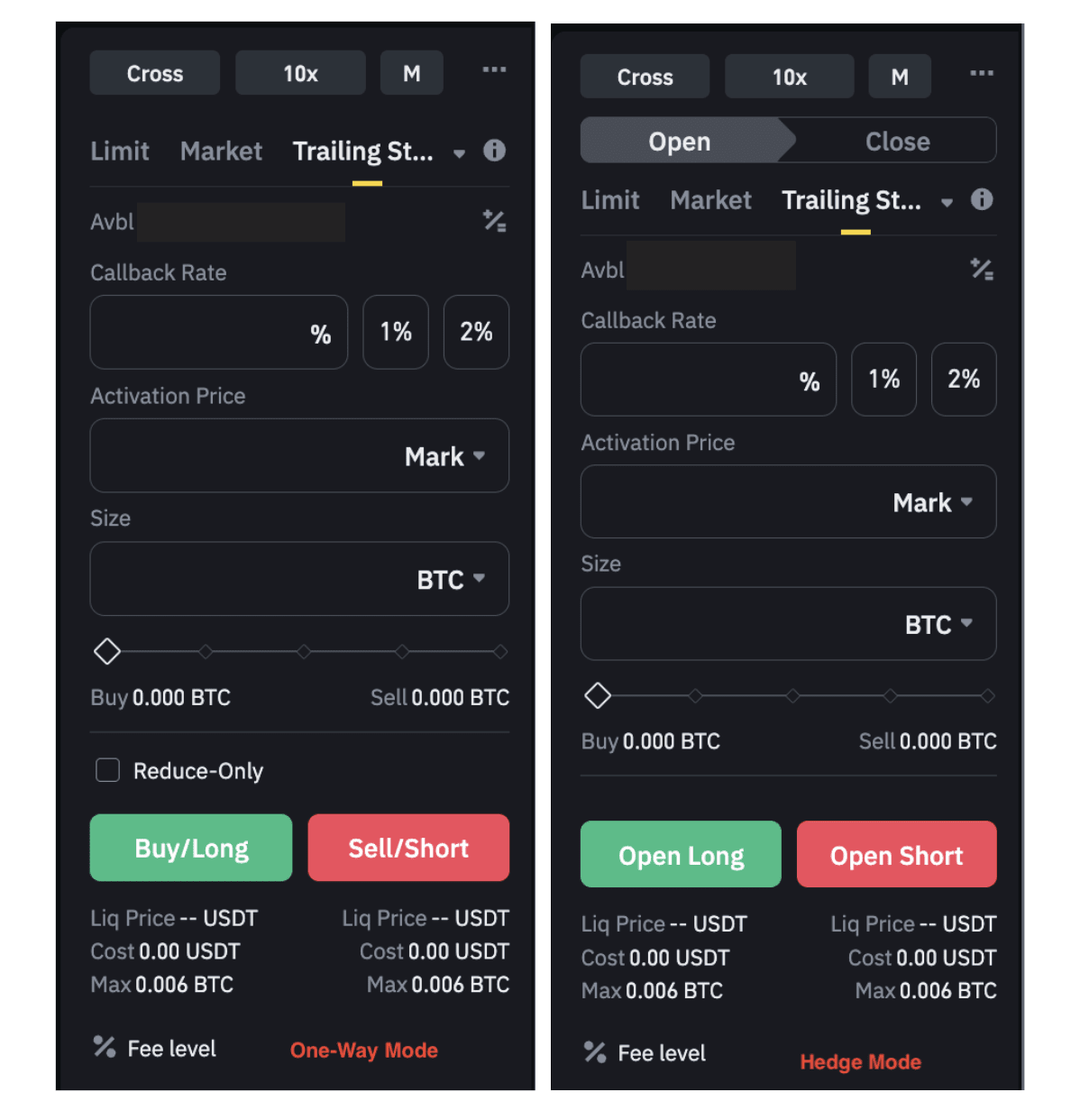

Binance’s updated futures support page explains trailing stops as orders that move with favorable price action and trigger after price reverses by a selected callback rate. That sounds simple, but the important trading decision is made before the order is placed: how far the market can move against the position before the exit should fire.
The activation price decides when the trailing logic begins. The callback rate decides how much opposite movement is tolerated. Binance also notes that trigger choice matters because traders can use mark price or last price, and those can diverge during extreme moves. A trailing stop that works in a calm tape can be too tight during a news spike and too loose when liquidation risk is already near.
A practical workflow starts with the trade thesis. If the position is a breakout trade, the activation price should not sit so close that normal noise triggers it before the breakout has room. If the position is already profitable, the callback rate should reflect current volatility and order-book depth, not a fixed percentage copied from another trade.
Trading takeaway: trailing stops are exit tools, not a substitute for position sizing. Before using one, define the invalidation level, liquidation distance, mark-versus-last trigger, expected slippage and whether the order is reduce-only. If those are unclear, a smaller position or a fixed stop may be cleaner.
Risk notice: This article is for platform education only. Futures and perpetual contracts involve leverage, liquidation risk, funding costs and execution slippage.
Sources: Binance futures trailing stop FAQ; Binance spot trailing stop FAQ; Binance developer trailing-stop FAQ.
原创文章,作者:financial transaction,如若转载,请注明出处:https://www.fanbi.net/archives/3610