
Most perpetual-futures traders focus on liquidation price, but the risk stack does not end there. Binance’s ADL explainer describes auto-deleveraging as a final step when a futures insurance fund cannot absorb a bankrupt position. Bybit’s help center similarly explains that ADL can reduce profitable or highly leveraged opposing positions in extreme conditions.
The uncomfortable lesson is that a profitable position can still be interrupted if the market structure is under stress. In normal markets, liquidation engines and insurance funds are designed to absorb losses. In fast markets with thin depth, liquidation orders can miss expected prices, leaving a shortfall. If the backstop is insufficient, ADL can reduce positions on the opposite side, often ranking accounts by profit and leverage.
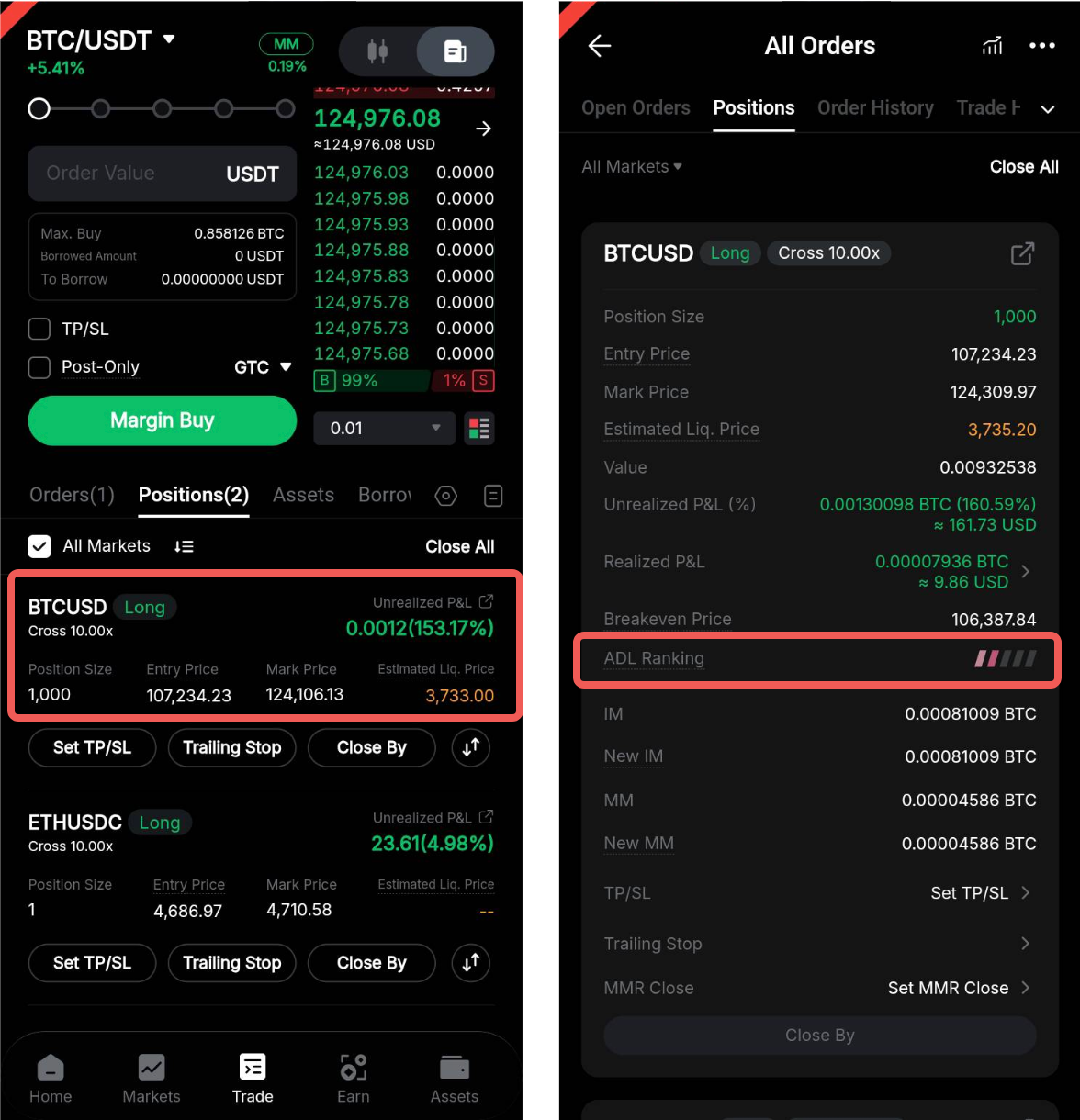
That does not mean traders should panic about every ADL indicator. It means leverage should be sized with venue risk in mind. A five-light ADL queue, high unrealized profit, large leverage and crowded positioning should be treated differently from a small, lightly leveraged hedge. Reducing leverage or partially closing a profitable position can lower exposure to the ADL queue on venues that provide such controls.
The practical checklist is to know where the ADL indicator appears, understand whether the contract is USDT-margined or coin-margined, check insurance-fund disclosures when available, and avoid adding size just because liquidation price looks far away. In perpetual futures, risk is not only your stop and your liquidation line; it is also the venue’s ability to process everyone else’s liquidation.
Sources: Binance ADL explainer; Bybit ADL mechanism; Cube Exchange ADL overview.
Risk notice: Perpetual futures involve leverage, liquidation, funding fees and platform-specific risk controls. This article is educational only and is not investment advice.
原创文章,作者:financial transaction,如若转载,请注明出处:https://www.fanbi.net/archives/2448