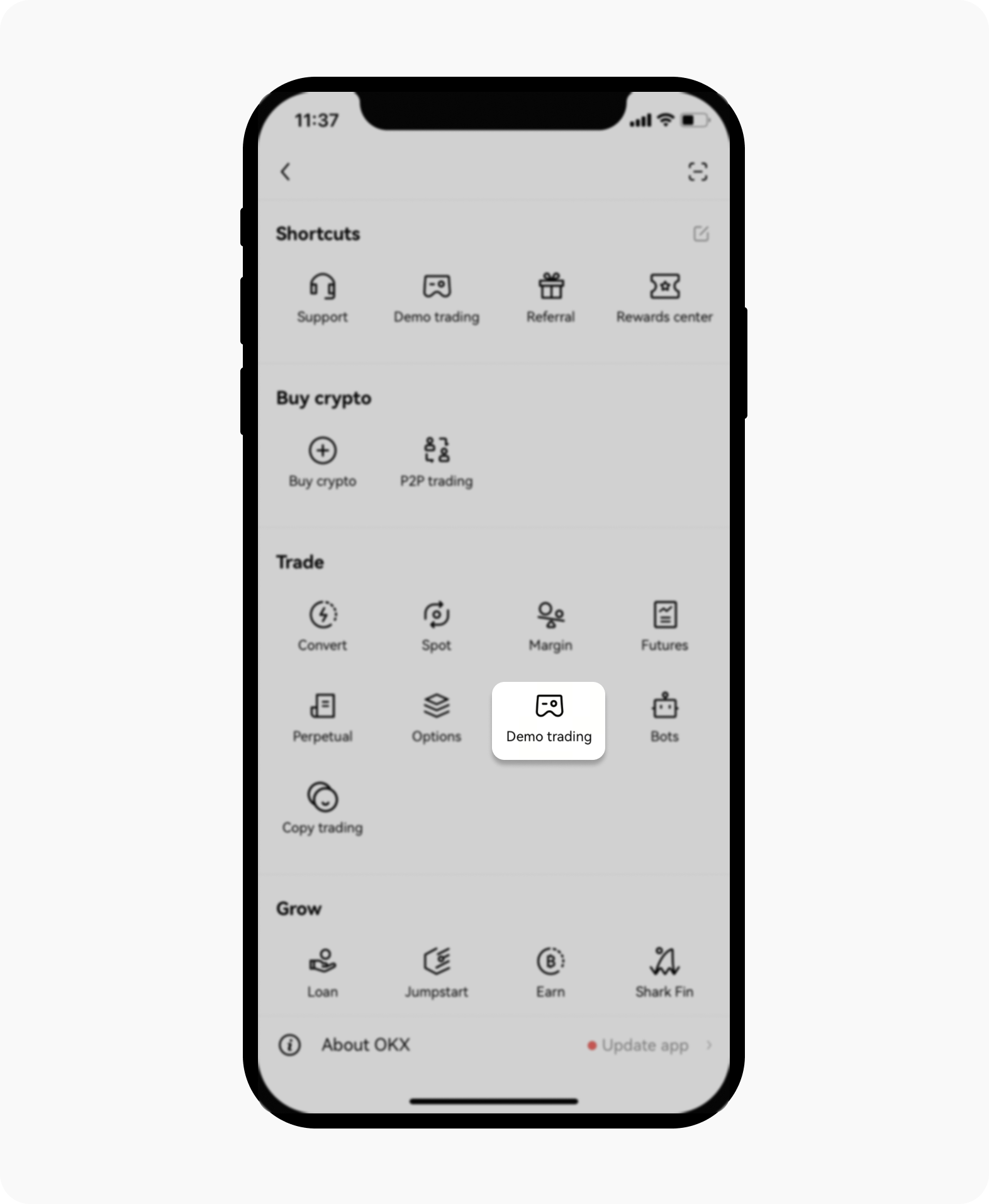

Demo trading is most valuable when it is treated as a workflow test, not a performance certificate. Binance describes demo trading as a virtual interface for spot and futures practice, OKX explains how users can switch into demo mode, and Bybit describes simulated accounts for practicing without real funds. That makes demo mode useful before a first leveraged trade.
The first goal is mechanical: learn where margin mode, leverage, order type, TP/SL, reduce-only settings and position history appear. A trader should be able to open, modify and close a small simulated position without hunting through menus. If that cannot be done calmly in demo mode, it will not become easier during a live liquidation scare.
The second goal is scenario testing. Try a market order, a limit order that does not fill, a stop order, a partial close, and a full close. Then record how unrealized P&L, margin ratio and estimated liquidation price react. The lesson is not that a demo winner will win live; the lesson is which controls move which risk number.
Demo mode has limits. Slippage, funding costs, emotional pressure, API reliability and real liquidity can differ from simulation. Before moving from demo to live, reduce size, use one market, and define the maximum loss in account currency rather than in percentage terms. Practice should lower operational mistakes, not justify bigger leverage.
Sources: Binance demo trading guide; OKX demo trading guide; Bybit demo trading FAQ.
Risk notice: Simulated trading does not guarantee live results. Fees, slippage, funding and emotion can change outcomes. This article is educational only.
原创文章,作者:financial transaction,如若转载,请注明出处:https://www.fanbi.net/archives/2446