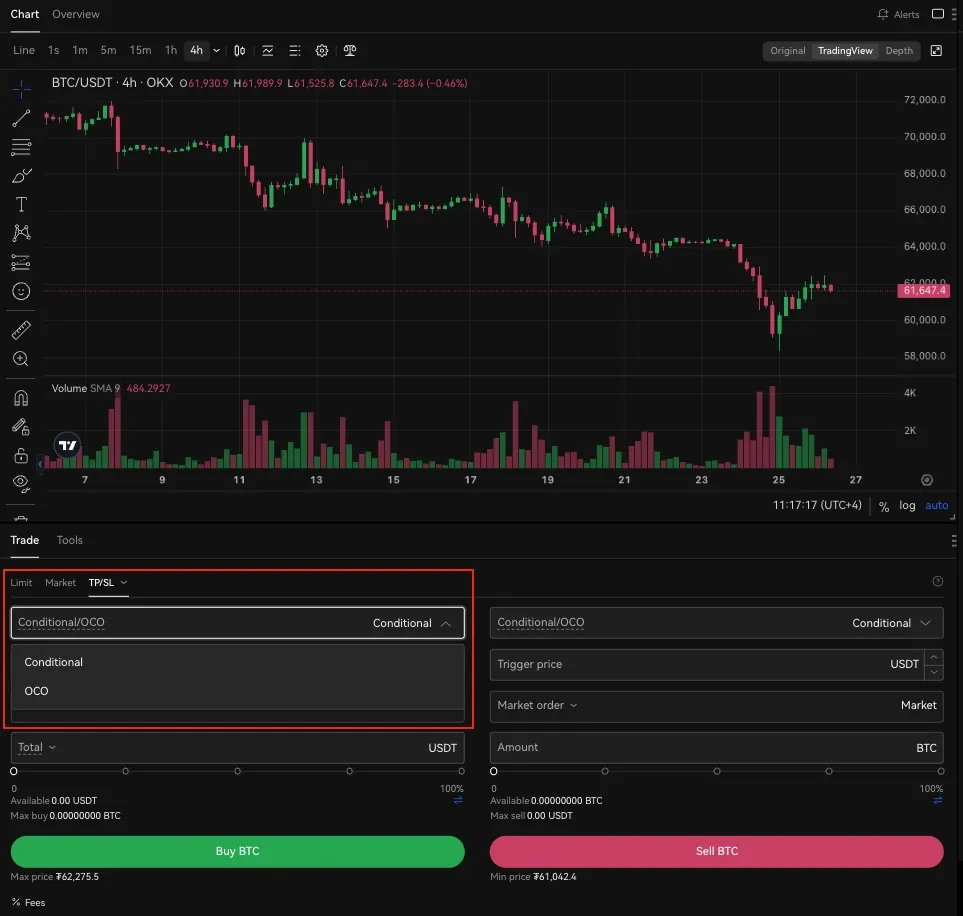
Take-profit and stop-loss tools are basic risk controls, but they are not magic buttons. OKX’s updated TP/SL guide explains conditional and OCO order logic, including the difference between market and limit execution after a trigger. OKX’s DEX risk article also notes that decentralized trading may require automation tools or bot infrastructure rather than the same native stop interface that centralized exchanges provide.
The first decision is whether the stop should prioritize execution or price. A stop-market style exit usually has a better chance of closing the position, but the final fill can be worse than expected during fast moves. A stop-limit style exit controls the worst acceptable price, but it may not fill if the market jumps through the limit. That trade-off is especially important in altcoins, weekend liquidity, news events and leveraged perpetuals.
A better workflow is to define the invalidation level before entering, place the stop with reduce-only or close-position settings when available, and size the trade so the stop loss is tolerable. DEX traders should add two more checks: whether the automation provider can execute during congestion, and whether wallet approvals or gas conditions could block the planned exit.
Sources: OKX guide to take-profit and stop-loss orders; OKX article on managing DEX trading risk; Bitcoin Foundation stop-loss explainer.
Risk notice: Stop orders can fail, slip, or execute at unfavorable prices. DEX automation introduces additional smart-contract, wallet and gas risks. This article is educational only.
原创文章,作者:financial transaction,如若转载,请注明出处:https://www.fanbi.net/archives/1513