

Bybit’s help-center guide explains reduce-only orders as an additional option for limit orders that strictly reduce an existing position. The guide says the feature is designed to prevent a take-profit or exit order from accidentally opening a new position in the opposite direction after the original trade has already been closed, stopped out, or liquidated.
That small checkbox matters most when traders layer multiple orders around one futures position. Without reduce-only logic, a take-profit limit order can remain active after a stop-loss closes the position. If price later rebounds into that old take-profit order, the exchange may treat it as a fresh short or long entry rather than as an exit.
A practical workflow is simple: use reduce-only for take-profit, partial close, and manual limit-close orders; size total close orders so they do not exceed the open position; review active orders after any stop or liquidation event; and avoid placing new directional entries from the same ticket by mistake. Traders should also understand how their exchange cancels or reduces competing reduce-only orders when position size changes.
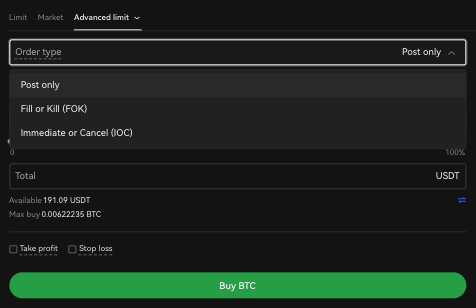
OKX’s order-type guide is a useful companion because time-in-force choices such as post-only, IOC, and FOK change whether an order rests, fills partially, or cancels. Reduce-only controls direction risk, while time-in-force controls execution behavior. They solve different problems and should be checked separately.
Sources: Bybit reduce-only order guide; OKX basic order types guide; Kraken derivatives order types.
Risk notice: Reduce-only settings can reduce accidental position flips, but they do not guarantee fills or prevent losses from leverage, gaps, liquidation, or platform rules. This article is educational and is not investment advice.
原创文章,作者:financial transaction,如若转载,请注明出处:https://www.fanbi.net/archives/2070
