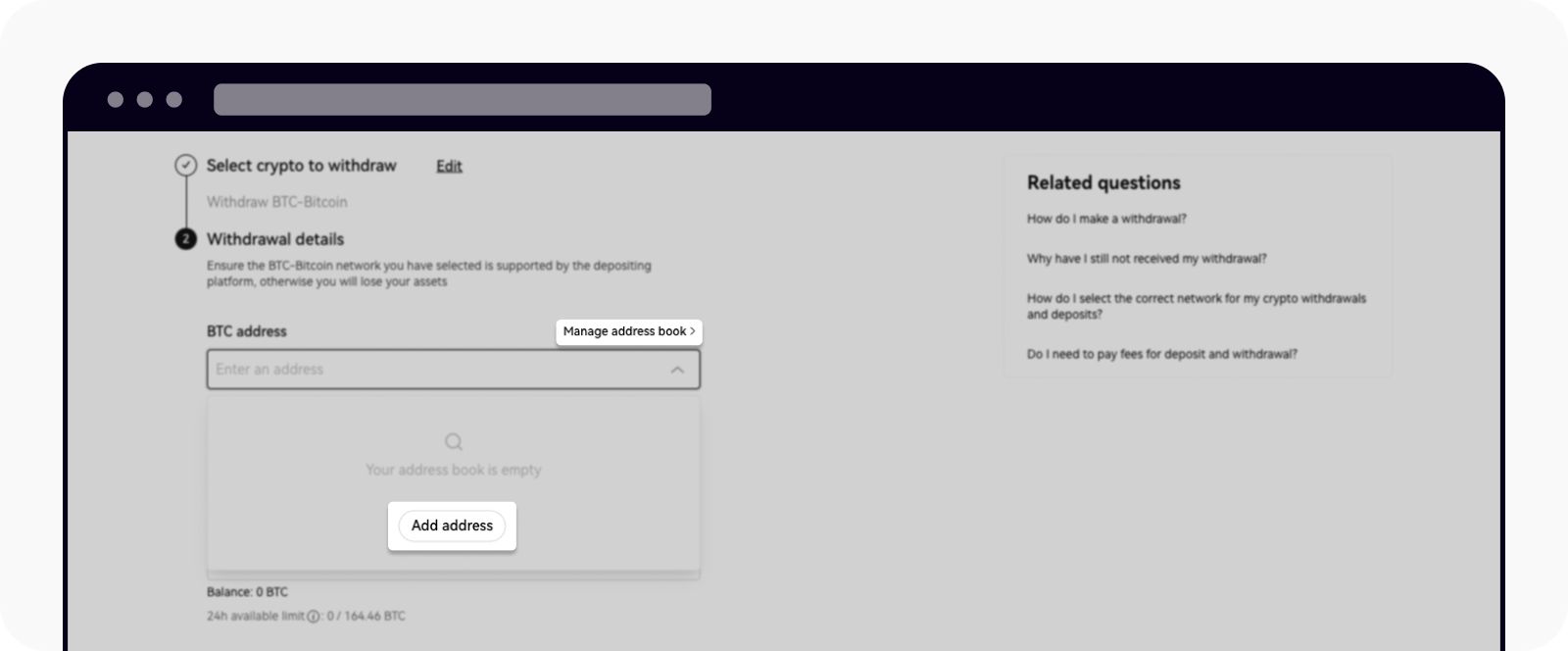
A withdrawal allowlist is boring until it becomes the control that slows an account takeover or prevents a wrong-address panic. Coinbase describes whitelisting as a feature that restricts crypto withdrawals to addresses already saved in the user’s address book, while OKX says its allowlist limits withdrawals to saved addresses and adds protection if an account is compromised.
The practical workflow is simple: add the exchange account, self-custody wallet and cold-storage addresses you actually use; give each one a clear nickname; verify the chain and memo or tag requirements; then wait through any platform holding period before you need to move funds urgently. Kraken’s withdrawal-address guide also highlights that a new address must be added and confirmed before use.
Traders should not treat allowlists as a substitute for checking the network. A USDT address on Tron, Ethereum or another chain is not automatically interchangeable, and some assets require destination tags, memos or special formats. The allowlist reduces unauthorized destinations; it does not make a wrong-chain withdrawal safe.
The best time to configure this feature is during calm market hours, not during an exchange outage, liquidation event or large asset transfer. For active traders, the allowlist should cover the small number of venues and wallets that are actually used, rather than becoming a cluttered list of stale addresses.
Sources:
- Coinbase Help: Address book and crypto withdrawal whitelisting
- OKX Help: How to enable allowlist
- Kraken Support: Adding and confirming a withdrawal address
- Binance Academy: Withdrawal address management
Risk notice: Security settings reduce operational risk but cannot remove market, custody or wrong-network risk. This is platform education, not financial advice.
原创文章,作者:financial transaction,如若转载,请注明出处:https://www.fanbi.net/archives/1957