
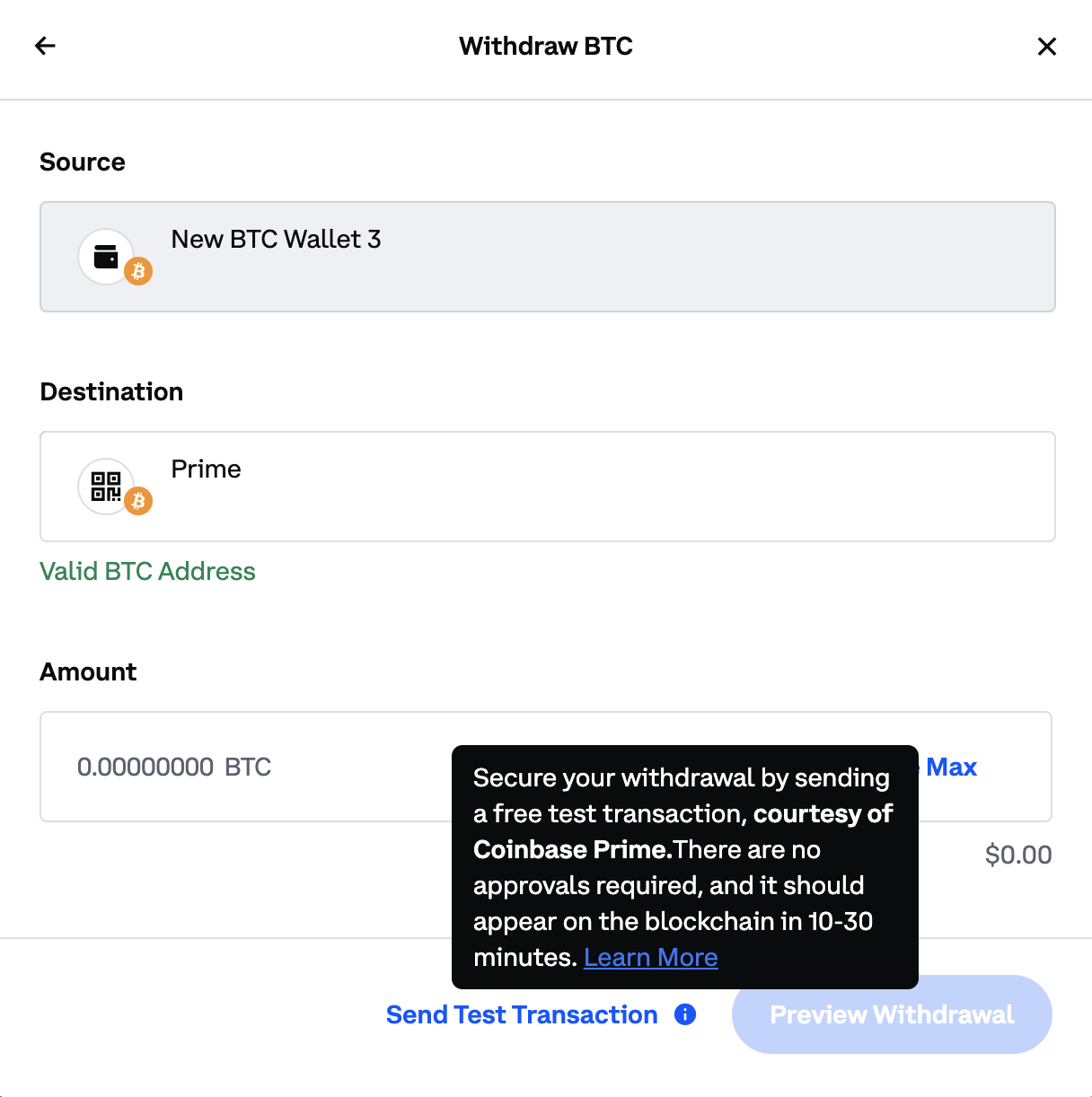
Fast withdrawals are convenient, but the larger trading risk is operational: sending the right asset to the wrong chain, copying a poisoned address, or approving a transfer to an account you do not control. Coinbase Exchange’s help pages describe an Address Book feature and a whitelisting setting that can restrict withdrawals to approved addresses. Coinbase Prime also documents test transactions as a way to verify a destination before a full transfer.
A practical workflow is simple. Add the destination address, check the network, label the address clearly, and wait through any security holding period required by the platform. Before sending size, make a small transfer or test transaction where the platform supports it. Then verify arrival on the destination wallet and explorer before sending the full amount. For stablecoins, the network matters as much as the ticker: USDC on one chain is not the same withdrawal route as USDC on another chain.
Traders should also separate transfer speed from transfer safety. A whitelist can feel slower when a new venue or wallet is added, but it reduces the chance that malware, a fake deposit page or a rushed manual copy turns into a permanent loss. For active traders, the best compromise is to pre-approve a small set of trusted venues and cold-storage addresses before volatility arrives.
Sources: Coinbase Help on Address Book and whitelisting; Coinbase Help on how whitelisting works; Coinbase Prime Help on test transactions.
Risk notice: This is a general platform workflow guide, not official customer support. Always confirm current exchange rules, network support, fees and holding periods inside your own account before transferring funds.
原创文章,作者:financial transaction,如若转载,请注明出处:https://www.fanbi.net/archives/1642