Mid-July crypto trading is being shaped less by a clean ETF trend and more by rapid changes in institutional demand. CoinDesk reported that U.S. spot bitcoin ETFs had a large redemption on July 13 and then rebounded with one of the stronger inflow days of the month, while ether ETF assets also moved above a closely watched threshold. That pattern is important because it describes a market still testing demand rather than a market with one stable narrative.
For traders, the first lesson is timing. ETF flow data often lands after the cash session and reflects creation and redemption activity rather than a live order-book signal. A large inflow can support sentiment, but it does not guarantee that spot liquidity will remain deep during Asia or weekend trading hours. A large outflow can pressure psychology, but it may be offset by derivatives positioning or stablecoin demand.
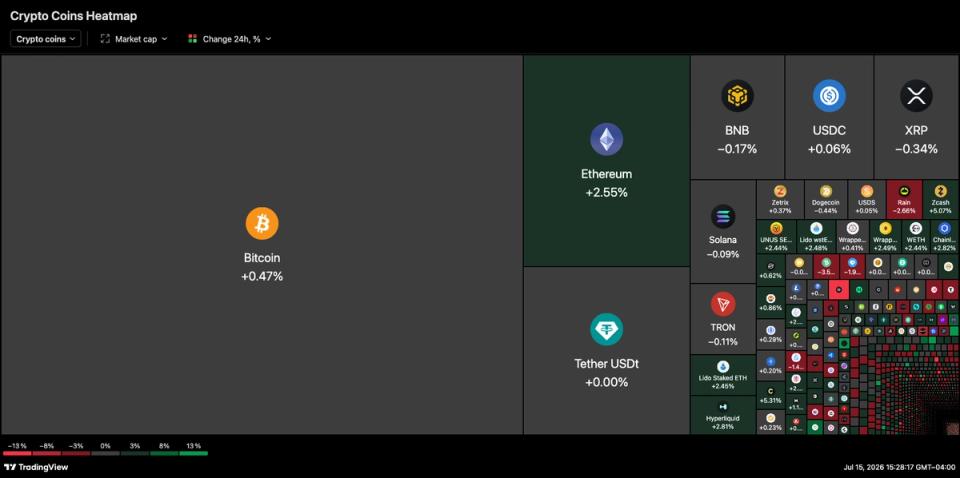
The second lesson is breadth. BTC and ETH can hold up while smaller tokens lose liquidity, or altcoins can rebound while ETF-linked demand remains uneven. That is why ETF flow should be read beside spot volume, perpetual funding, open interest quality and liquidation data. A rally supported mainly by rising leverage is different from one supported by spot buyers across sectors.
A practical workflow is to write down the flow direction, compare it with BTC and ETH basis or funding, then check whether the move is spreading to other liquid coins. If those signals disagree, position size should be smaller and stop placement should allow for gaps and slippage.
Sources: CoinDesk July 15 ETF flow market update; SoSoValue U.S. spot Bitcoin ETF dashboard; SoSoValue U.S. spot Ether ETF dashboard.
Risk notice: ETF flow data is delayed and incomplete as a trading signal. Crypto assets and derivatives can move sharply, and this article is educational commentary rather than investment advice.
原创文章,作者:financial transaction,如若转载,请注明出处:https://www.fanbi.net/archives/3672