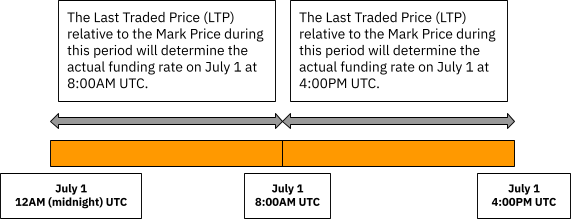
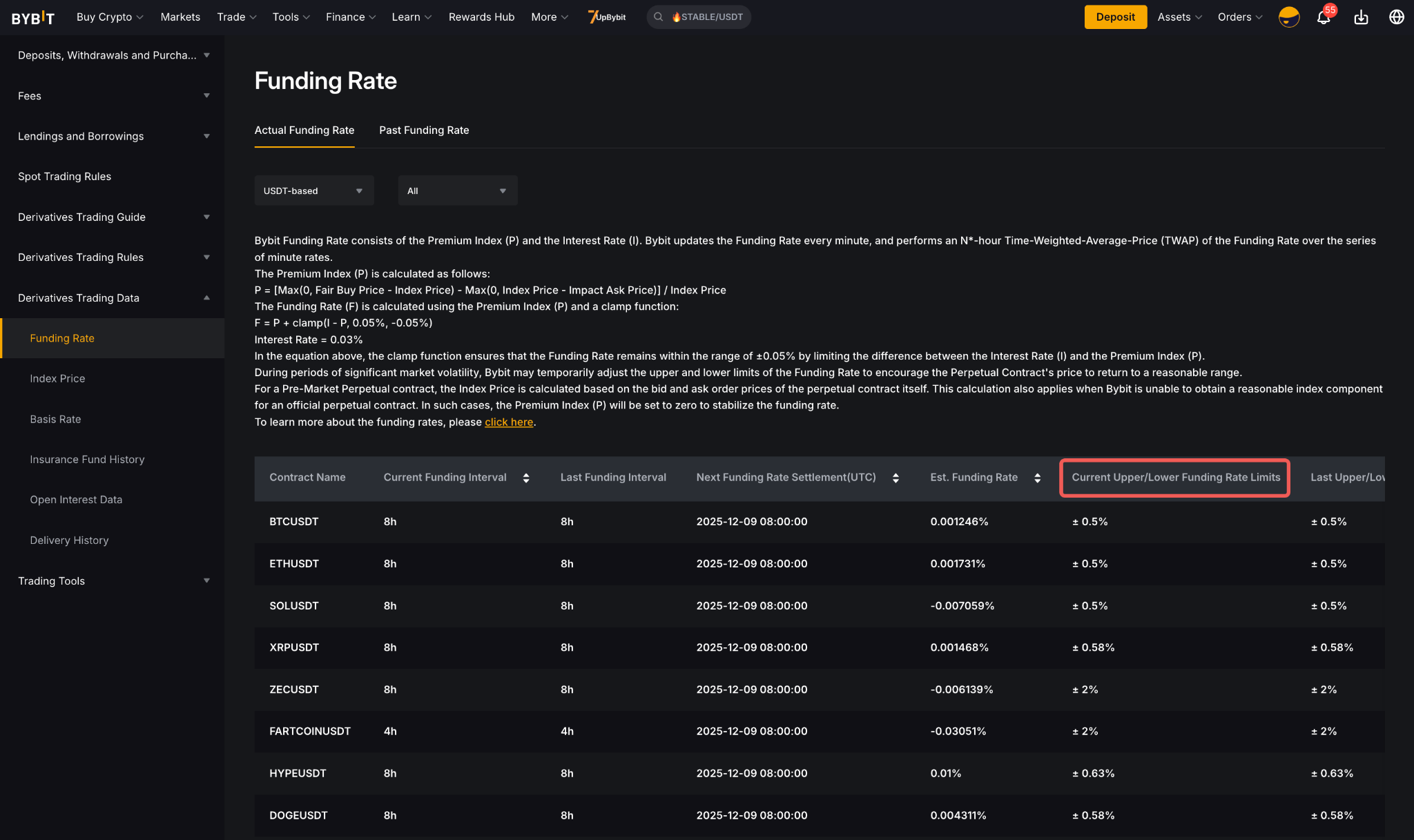
Bybit’s help center explains that perpetual funding rates are not fixed. They update in real time using interest-rate and premium-index components and are settled at the contract’s funding interval. Bybit’s public funding-rate page also shows the formula logic and contract-level rate information, while recent announcements show that funding intervals can change for selected perpetual contracts.
That matters because funding is a carrying cost, not just a small line item. A trade that looks profitable on price can become unattractive if a crowded long position pays repeated positive funding. The opposite can happen for shorts when negative funding persists. The longer the holding period and the higher the leverage, the more funding affects realized results.
Before opening a perpetual position, traders should check the current rate, predicted rate, next settlement time, interval length, and whether the symbol has a special announcement. A move from a longer interval to a shorter one can increase how often costs are realized, even if the displayed rate looks manageable at first glance.
Funding should also be compared with the trading thesis. If the position is a short event hedge held for a few hours, funding may be secondary. If it is a multi-day leveraged trend trade, funding can be the difference between a clean setup and an expensive hold. Put the expected funding cost into the stop-and-target plan before the order is placed.
Sources: Bybit introduction to funding rate; Bybit funding-rate information page; Bybit DATAUSDT funding-interval announcement.
Risk notice: Perpetual futures are leveraged instruments. Funding-rate information can change quickly and should be checked directly before trading.
原创文章,作者:financial transaction,如若转载,请注明出处:https://www.fanbi.net/archives/3349