Withdrawal security is usually treated as an account-setting chore, but active traders should view it as part of trading infrastructure. An address allowlist can reduce the damage from an account compromise because withdrawals are limited to approved addresses, but it also changes how quickly funds can be moved.
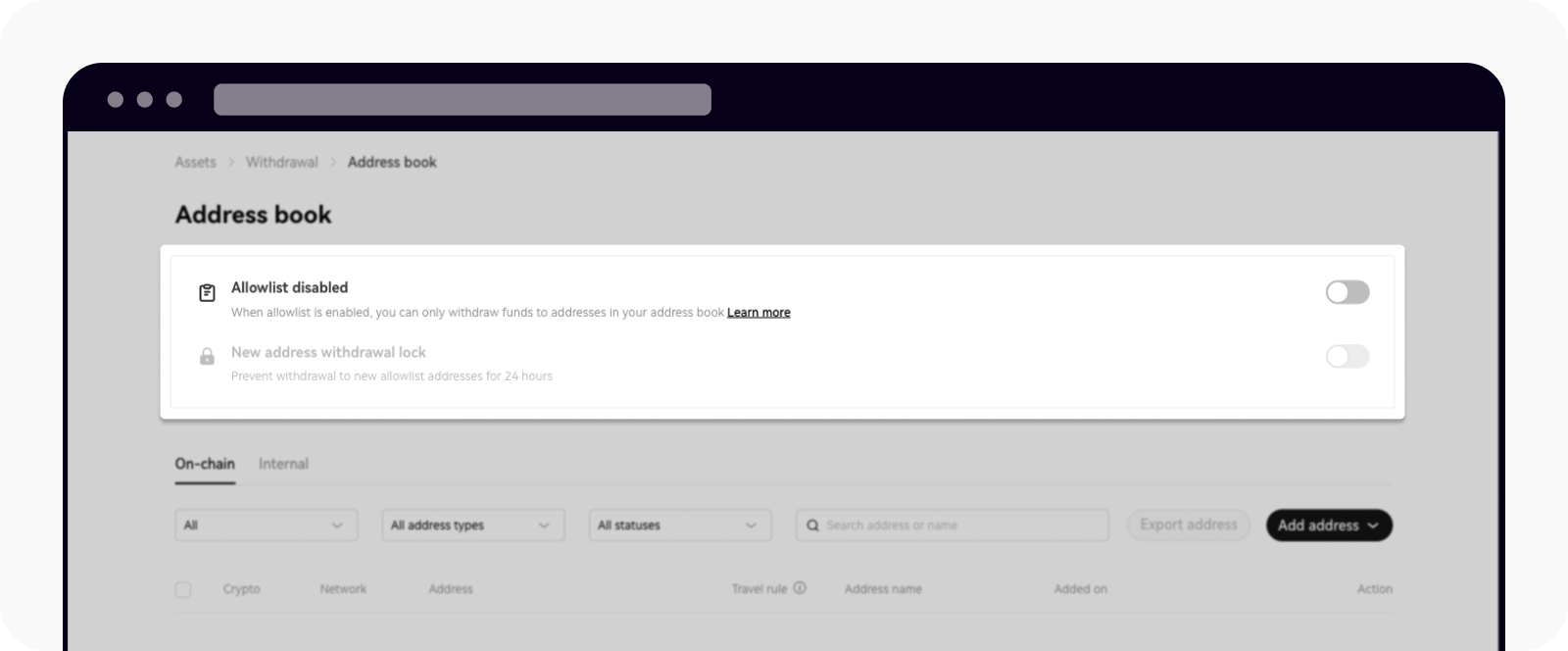
Coinbase explains that whitelisting on Coinbase Exchange allows withdrawals only to addresses already in the Address Book, and adding new addresses can require a hold period. OKX says its allowlist lets users withdraw only to saved addresses and that a new-address withdrawal lock can add extra protection for newly added addresses.
The trade-off is obvious. Stronger withdrawal controls are useful when a password, API key or session is compromised. But if a trader waits until volatility arrives to add a cold wallet, broker funding address or exchange deposit address, the security delay can become a liquidity problem.
A cleaner workflow is to prepare before size increases. Add the main cold-wallet address, the exchange account used for liquidity, the correct network for each asset, and any memo or tag required by assets such as XRP-style transfers. Then send a small test transfer and confirm the full path before moving meaningful size.
For teams or high-frequency operators, the allowlist should be paired with API permissions, withdrawal limits, anti-phishing codes and device reviews. The goal is not to make withdrawals impossible; it is to make unauthorized withdrawals harder while keeping planned treasury movement predictable.
Sources: Coinbase Exchange address book and whitelisting help; OKX help on enabling allowlist on web; Kraken support on adding and confirming withdrawal addresses.
Risk notice: This article is for platform-education purposes only. Always verify the exact rules inside your own exchange account before moving funds.
原创文章,作者:financial transaction,如若转载,请注明出处:https://www.fanbi.net/archives/2631