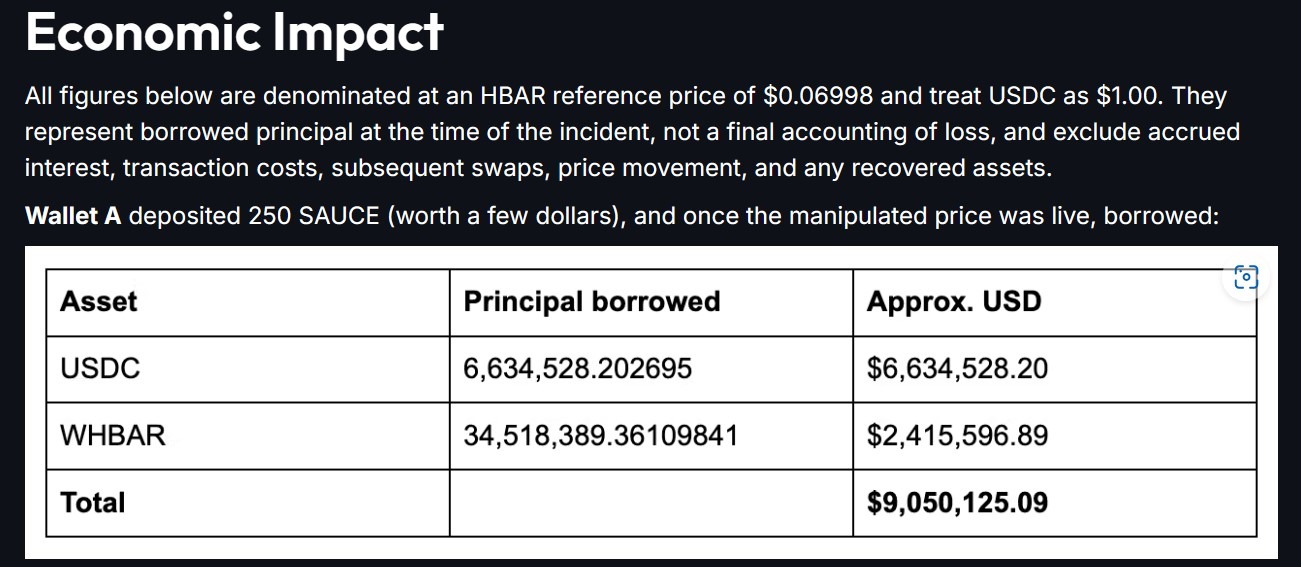
Bonzo Lend’s reported loss of about $9 million is more than another exploit headline. Cointelegraph reported that an attacker manipulated the price of SAUCE collateral through a flaw in Supra’s oracle verifier, then borrowed USDC and wrapped HBAR far beyond the real value of the initial deposit. For traders, the key lesson is that a lending market can look healthy until the pricing layer fails.
Oracle risk matters because it sits between the token balance shown in a wallet and the borrowing power granted by a protocol. If an oracle accepts a bad price, the protocol may behave exactly as coded while still allowing the wrong economic outcome. That is why total value locked, headline yields and chain reputation are incomplete risk signals.
A practical DeFi checklist starts with three questions. Which oracle feeds the collateral? Is the collateral liquid enough to absorb forced selling? Are borrow caps, price sanity checks and pause controls visible before an incident? If the answer is unclear, traders should size the position as an experiment rather than as core capital.
This also matters for derivatives traders watching DeFi tokens. An exploit can damage confidence in adjacent assets, trigger sudden liquidity withdrawal and widen spreads even when the underlying chain remains operational. The tradable signal is not only the stolen amount; it is the speed at which liquidity providers and market makers step back.
Sources: Cointelegraph crypto today report; Supra public site; Hedera public site.
Risk notice: This article is for market observation and trading education only. It is not investment advice. DeFi protocols, tokens and leveraged positions can lose value rapidly.
原创文章,作者:financial transaction,如若转载,请注明出处:https://www.fanbi.net/archives/2542