:max_bytes(150000):strip_icc()/GettyImages-2285213635-9f18352aabfc4eb7bb3303829f60dc01.jpg)
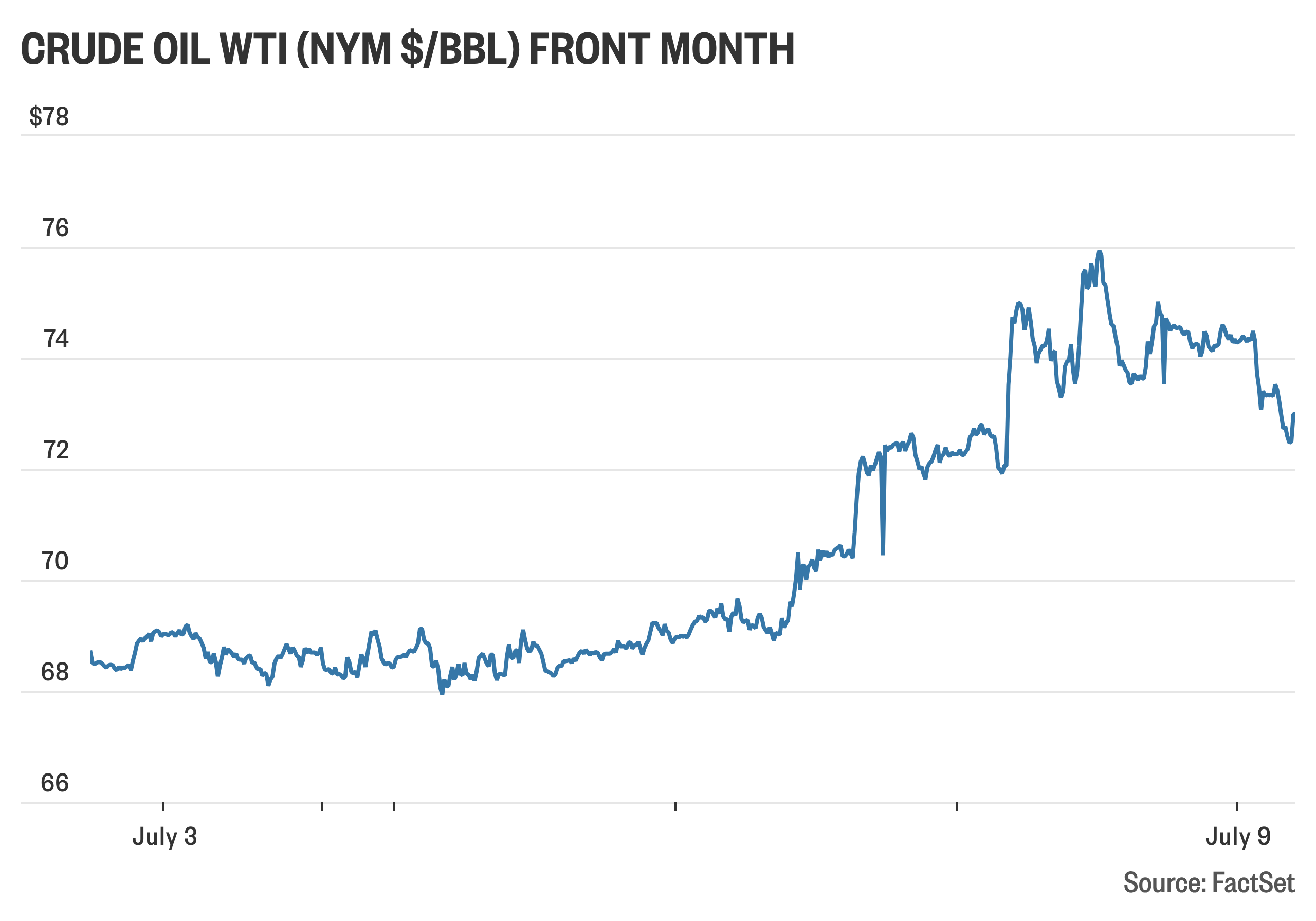
The cross-market tape is still uneasy. MarketWatch reported that oil prices slipped on Thursday after a sharp midweek jump tied to renewed U.S.-Iran tensions. WTI had moved near $76 before trading back below $73, while Brent eased after moving above $80.
Investopedia’s July 9 premarket briefing showed why index futures were not giving a simple all-clear. S&P 500 and Nasdaq futures were modestly higher after the previous selloff, but traders were also watching oil, gold, Treasury yields, Fed-minutes fallout and earnings news from companies including PepsiCo, AstraZeneca and Levi Strauss.
For futures traders, the key question is whether the oil move is a temporary short-covering burst or a durable inflation shock. If crude holds a higher range, rate-cut expectations can weaken and equity duration trades can struggle. If the geopolitical premium fades quickly, attention can rotate back to earnings, AI demand, margins and sector leadership.
A useful intraday framework is to avoid treating oil, gold and equity futures as separate screens. Rising oil plus rising yields is usually a different message from rising oil plus falling yields. Similarly, a Nasdaq rebound driven by a few AI names may not confirm broad risk appetite if banks, homebuilders or consumer stocks remain under pressure.
Risk notice: Macro headlines can change quickly, especially around military conflict, central-bank communication and commodity supply. Futures involve leverage and can gap through stop levels.
Sources:
- MarketWatch: Oil prices dip after latest jump on Iran war angst
- Investopedia: 5 Things to Know Before the Stock Market Opens on Thursday
- Cboe: VIX volatility products
原创文章,作者:financial transaction,如若转载,请注明出处:https://www.fanbi.net/archives/1873