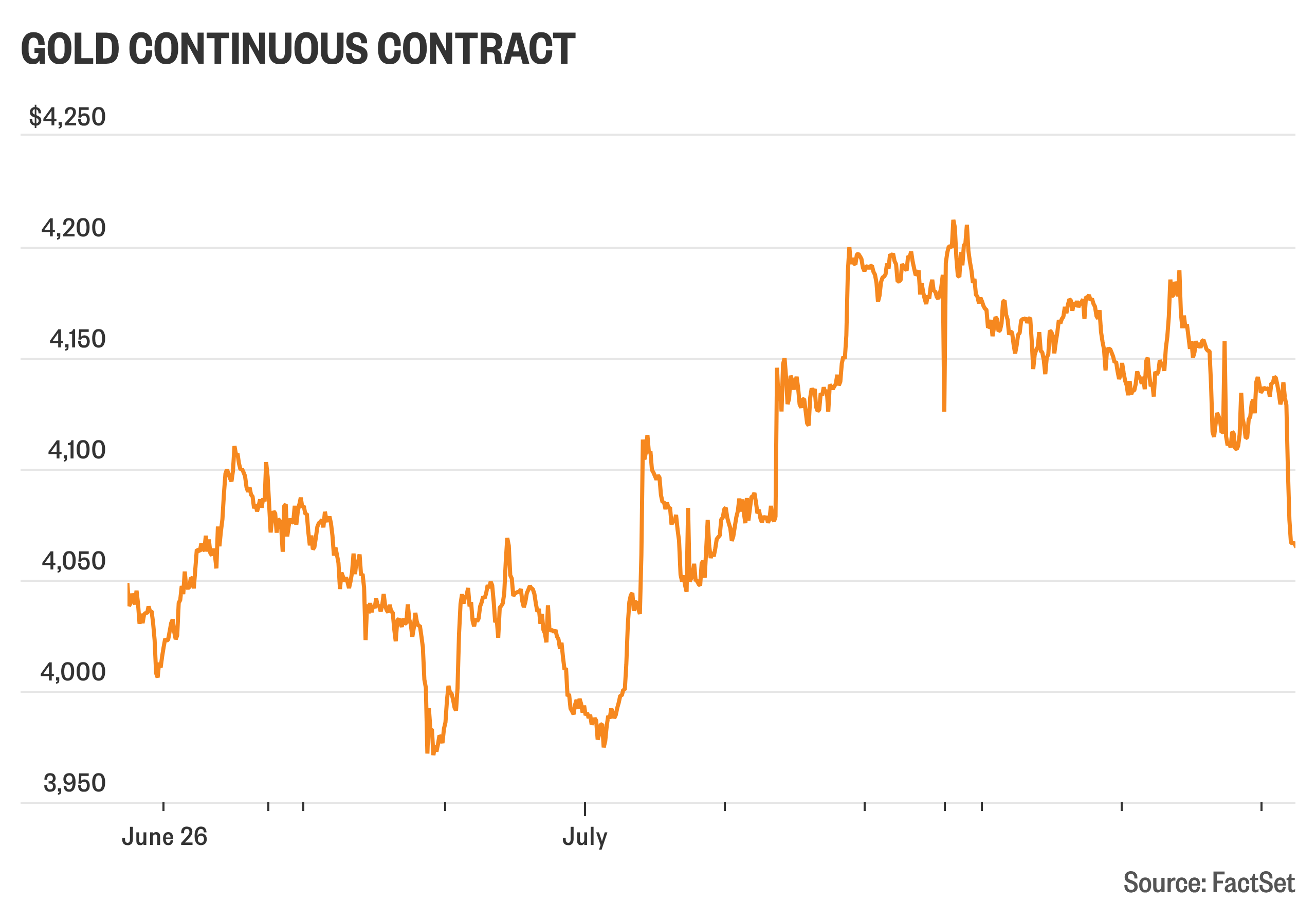
Gold’s latest slide while the dollar strengthened is a useful reminder for cross-asset traders: safe-haven assets do not move in a vacuum. Geopolitical stress can support precious metals, but higher Treasury yields and a stronger dollar can pressure gold because it pays no income and is priced globally in dollars.
MarketWatch reported front-month gold futures pulling back as the dollar and yields firmed, while investors waited for Federal Reserve minutes and reassessed inflation risks. That mix matters more than a single gold headline. If oil-driven inflation fears push real or nominal yields higher, gold can struggle even when risk sentiment is uneasy.
For stock and futures traders, the read-through is broader than bullion. A firm dollar can tighten financial conditions for emerging-market assets, pressure commodity importers, and weigh on multinational earnings translation. Rising yields can also hit long-duration equity sectors and crowded growth trades.
A practical dashboard should include gold futures, the U.S. dollar index, 10-year Treasury yields, real-yield proxies, oil, and equity-index futures. When gold rises alongside falling yields and weaker equities, it looks more like classic defensive demand. When gold falls while yields and the dollar rise, the market may be pricing inflation and policy risk rather than pure fear.
The trading mistake is to treat gold as a guaranteed hedge. It can hedge certain shocks, but it can also become a funding source when margin pressure rises or a rate repricing strengthens the dollar. Position size and stop discipline still matter.
Sources: MarketWatch gold and dollar live coverage; MarketWatch market front page for July 8 headlines; CME Gold futures product page.
Risk notice: Futures and commodity products involve leverage, gap risk and contract-specific rules. This article is educational and does not recommend buying or selling gold, equities or futures.
原创文章,作者:financial transaction,如若转载,请注明出处:https://www.fanbi.net/archives/1650